The 20th century reshaped Stade more thoroughly than the centuries before it. By 1972 an administrative and garrison town on the edge of its region had become an industrial town on the Elbe, with considerably more land and more people. An overview of the main stages — soberly, and following the publicly documented facts.
The starting point: a seat of administration
From the 19th century Stade was the seat of the Landdrostei and later of the administrative district of Stade, first under Prussian and from 1946 under Lower Saxon administration. That district essentially covered the territory of the old duchies of Bremen and Verden. The authorities and the garrison shaped life in the town for decades — into the 1970s Stade was above all a town of officials and soldiers.
The Landkreis in its present form is also a product of the 20th century: in the Prussian district reform of 1 October 1932 the old district of Stade, the district of Kehdingen and the western part of the district of Jork were merged into a new district of Stade. The town itself had already incorporated Brunshausen and Stadersand in 1924; in the years that followed came Campe (1926) and Barge (1935), among others.
The years of National Socialism
After the local election of 1933 the NSDAP took power in the town with just under 41 per cent of the vote. SPD officials were arrested, the KPD banned, and in 1935 the German municipal code came into force. The Nuremberg laws applied in Stade too; younger Jewish residents had in many cases already left the town by 1935, and the persecution that followed struck mainly older people. From 1935 Jehovah’s Witnesses and Sinti were deported as well. At least 18 people from Stade were murdered in concentration and extermination camps.
On 1 January 1934 a so-called hereditary health court was set up for the Stade judicial district. Up to 1939 it ordered 951 forced sterilisations, some of which were carried out in the municipal hospital. The first deportations of Jewish people from the region began at the end of 1941, with Theresienstadt, Riga and Minsk as destinations. After the war began, Polish and Soviet prisoners had to perform forced labour in the district; from 1943 the infants of forced labourers were placed in separate homes, where 65 children died of malnutrition and neglect.
The Jewish cemetery, in use since 1824, was no longer maintained after 1940 and was cleared by the authorities that same year; only three gravestones were left standing. Memorial stones on Am Sande and Stolpersteine across the town commemorate the victims today.
1945 and the post-war years
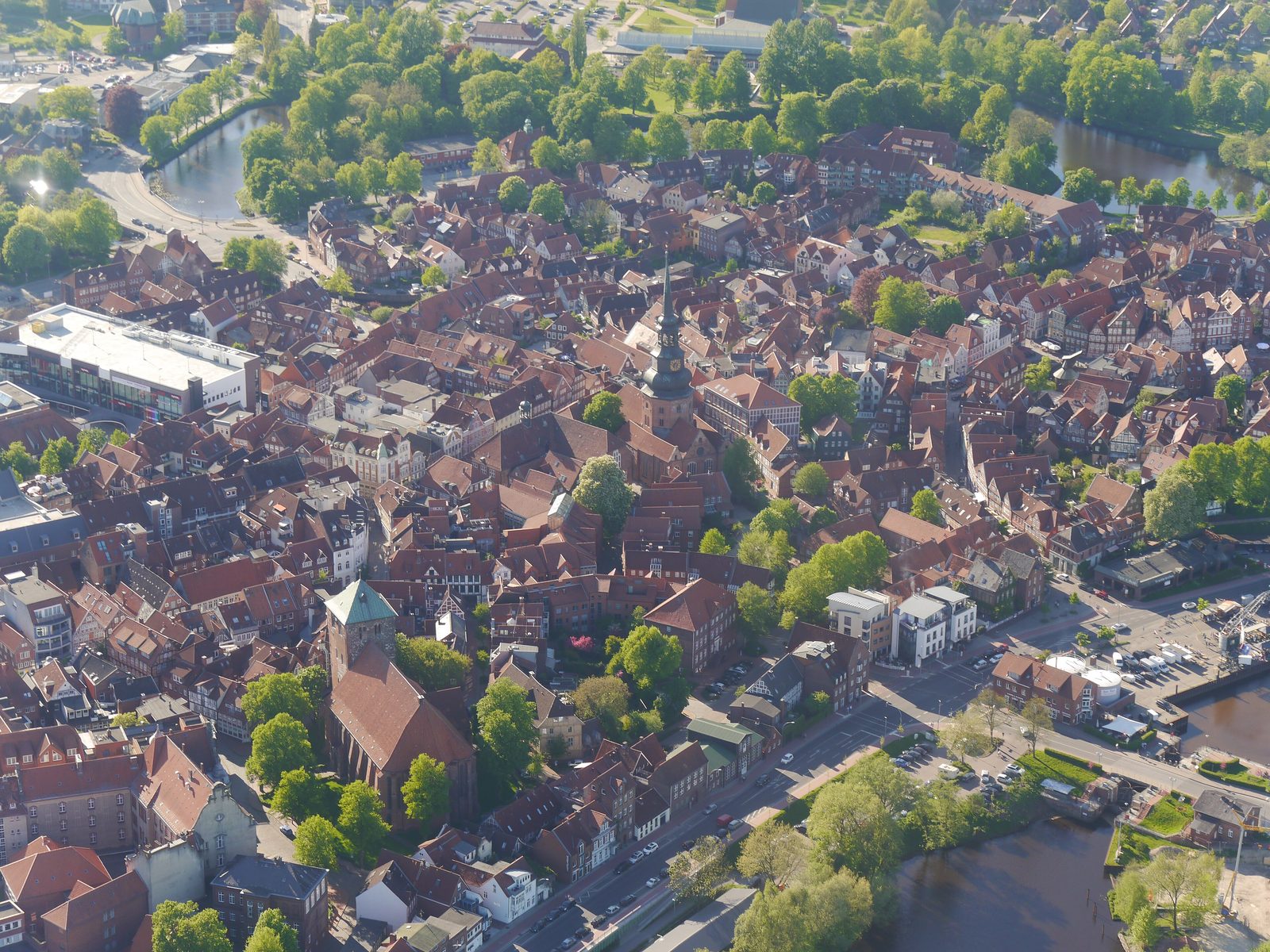
The historic centre came through the war largely intact. After 1945 Stade lay in the British occupation zone, and with the founding of the state of Lower Saxony in 1946 the Prussian administrative district became a Lower Saxon one. The town kept that status until the reform of 1978, when the Stade district was absorbed into the enlarged administrative district of Lüneburg.
The military remained a factor: the Stade-Agathenburg airfield, laid out in the 1930s, was used militarily again from 1956 and renamed the Von Goeben barracks in 1966. The site was closed only in 1994. From the late 1990s the new district of Ottenbeck, with housing and businesses, grew up on the former barracks grounds. Another date is remembered too: on 7 May 1962 a Belgian fighter-bomber crashed into the Schwinge next to the airfield estate. The pilot steered the aircraft away from the residential area and therefore ejected too late; he was killed.
1972: industry and territorial reform
The real break came at the start of the 1970s. At the end of the 1960s the decision was taken to settle heavy industry on the Elbe at Bützfleth. In 1972 the Stade nuclear power station went into operation, the seaport opened in the same year, and a chemical works and an aluminium plant were built. That ended the time when administration and garrison alone determined social life.
In parallel, the Lower Saxon territorial reform reorganised the municipalities: on 1 July 1972 Bützfleth, Haddorf, Hagen, Schölisch and Wiepenkathen were incorporated into the town of Stade. Stade thus grew considerably in area and population; today the number of inhabitants lies in the 40,000 to 50,000 band, which can be read among other things from the size of the town council with its 40 members.
A small postscript
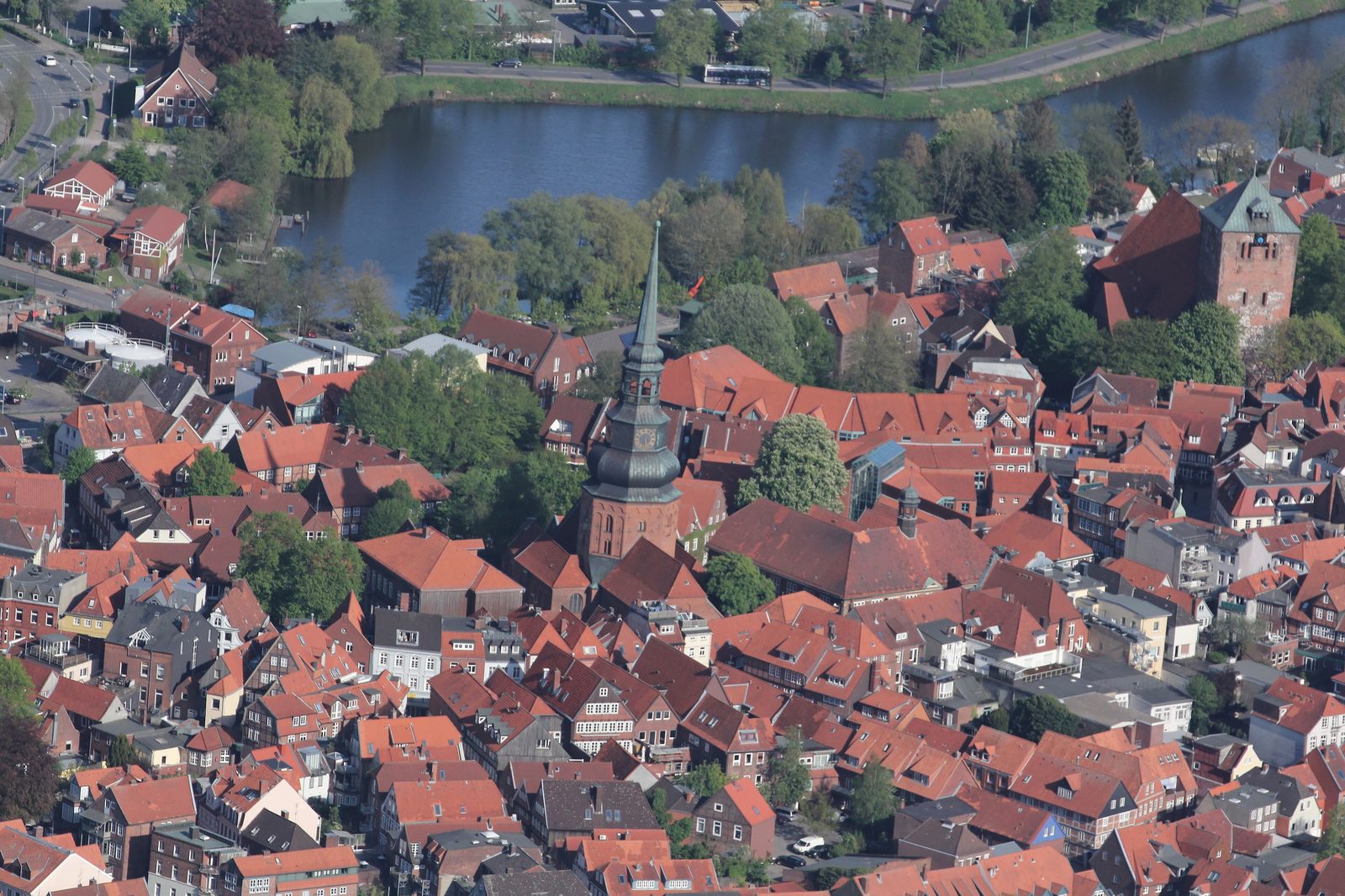
That the town was repeatedly a filming location for the television series “Kümo Henriette” between 1978 and 1981 — with scenes at the Hanseatic harbour and the old town hall — shows that the historic centre survived all this change. Anyone walking through the old town today sees the result of that century: a preserved old core, surrounded by a town that grew several times over in the 20th century.