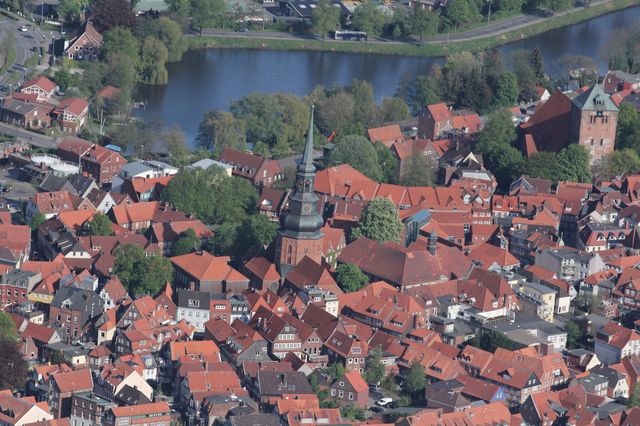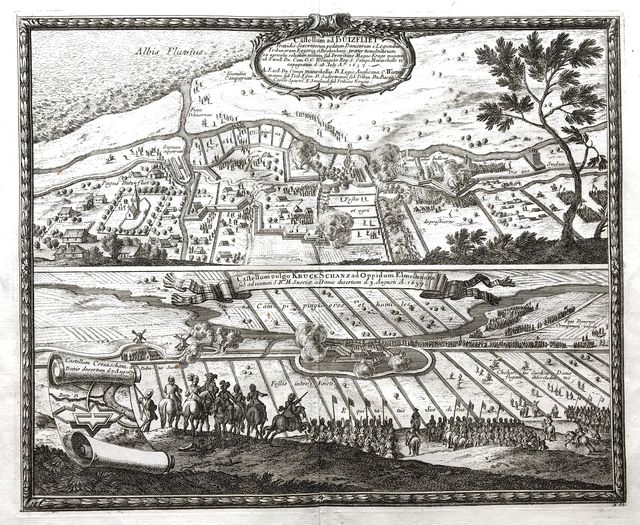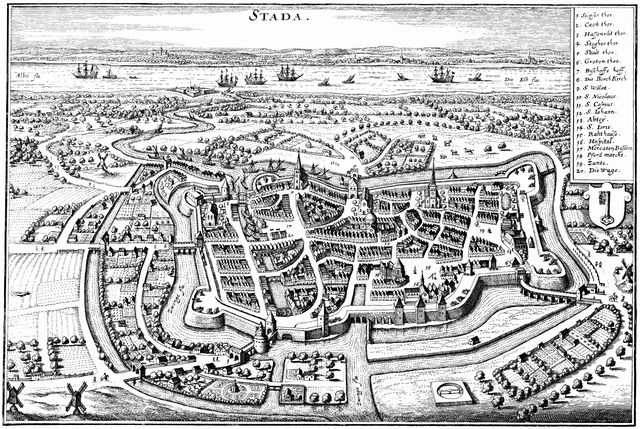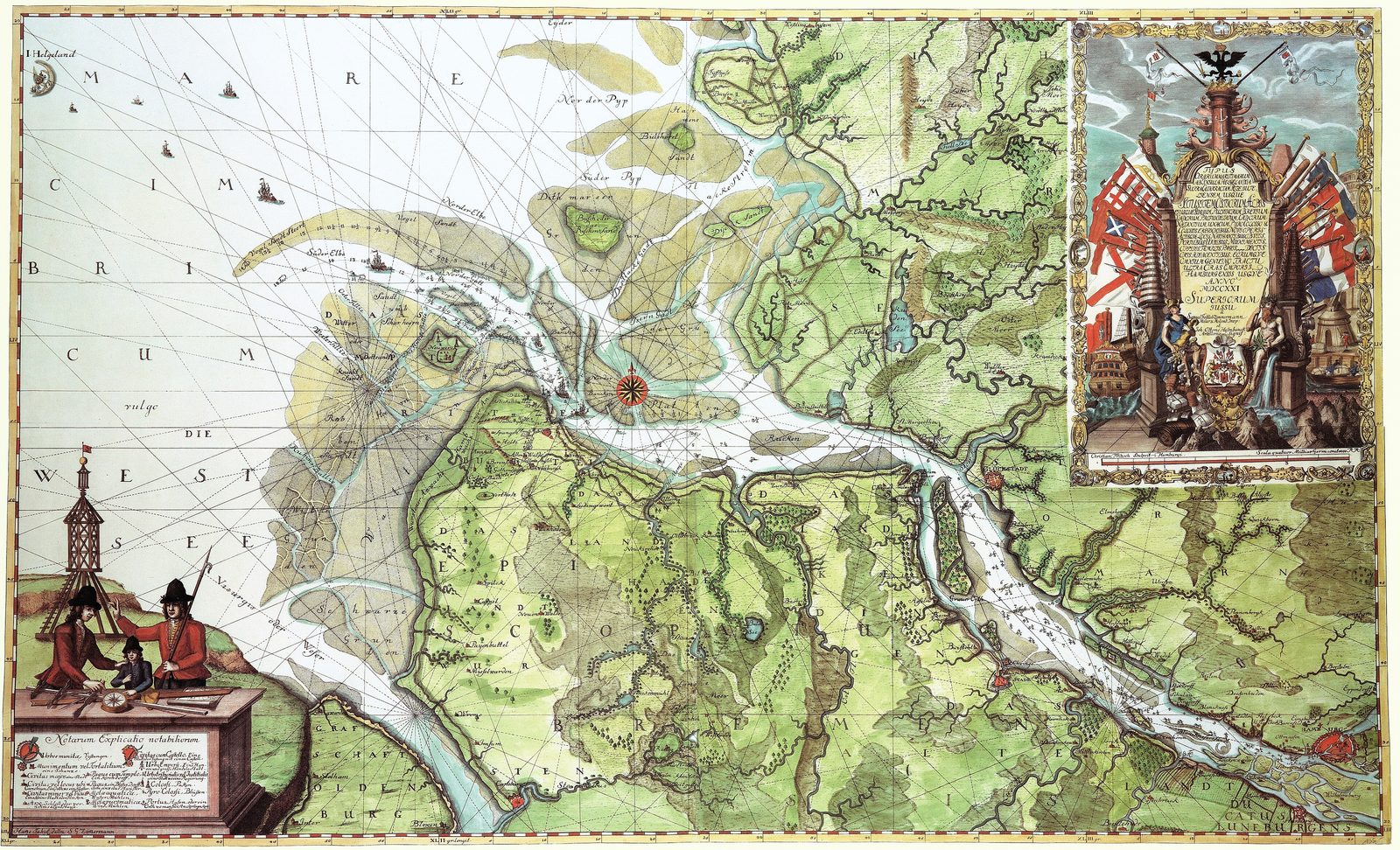
When the Swedish period ended in 1715, Stade was exhausted: an outdated harbour, the plague only just survived, long-distance trade gone elsewhere. What remained was its role as a seat of administration and of the military — and the town filled that role for the next century and a half under Hanoverian, French and Prussian rule.
1715: sold to Hanover
The duchy of Bremen-Verden with its capital Stade had been conquered by Danish troops in 1712, during the Great Northern War. In 1715 Denmark sold the territory to the electorate of Brunswick-Lüneburg, commonly known as Hanover; Stade thus passed to the Welfs “by contractual agreement”. Sweden finally gave up its claims on 17 November 1719 in the Treaty of Stockholm. That ended a confrontation which had made Stade a contested fortress for almost a century.
Economically the town was in a bad way. Fires, sieges and the Danish bombardment of 1712, which destroyed a quarter of the built-up area, had left the harbour without modernisation. The plague had also broken out in 1712. Stade lost weight in long-distance trade — Hamburg was too close. What remained was its strategic position: it stayed a garrison and became the seat of the administration for the former duchies of Bremen and Verden.
The Landdrostei of Stade
In the electorate, later the kingdom of Hanover, the territory of the old duchies of Bremen and Verden was administered together with the land of Hadeln as the Landdrostei of Stade — an intermediate authority between the government in Hanover and the local offices. That arrangement proved remarkably durable: it survived the Prussian period as the administrative district of Stade until 1978 and still shapes the reach of institutions such as the Landschaftsverband Stade, founded in 1963, which coordinates cultural work in the Elbe–Weser triangle.
The French, a prefecture, an empire
The Napoleonic period brought Stade several masters in a few years. On 18 June 1803 French troops occupied the town; after their withdrawal various European occupations alternated until 1806. From March to December 1810 Stade housed the prefecture of the department of the Elbe and Weser estuaries, part of the Napoleonic kingdom of Westphalia. The town was then incorporated directly into the French empire until 1813 as part of the Département des Bouches de l’Elbe. Only afterwards did it return to the kingdom of Hanover, which had grown out of the electorate in 1814.
1866: Prussia takes over
The war between Prussia and Austria in 1866 also decided the fate of Hanover: the kingdom had been on the losing side and was incorporated into the Prussian state as the province of Hanover. For Stade that meant no break but a renaming with promotion. The Hanoverian Landdrostei became the Prussian administrative district of Stade, essentially covering the historic duchies of Bremen and Verden. In 1885 the first district of Stade was created within it — the origin of today’s Landkreis.
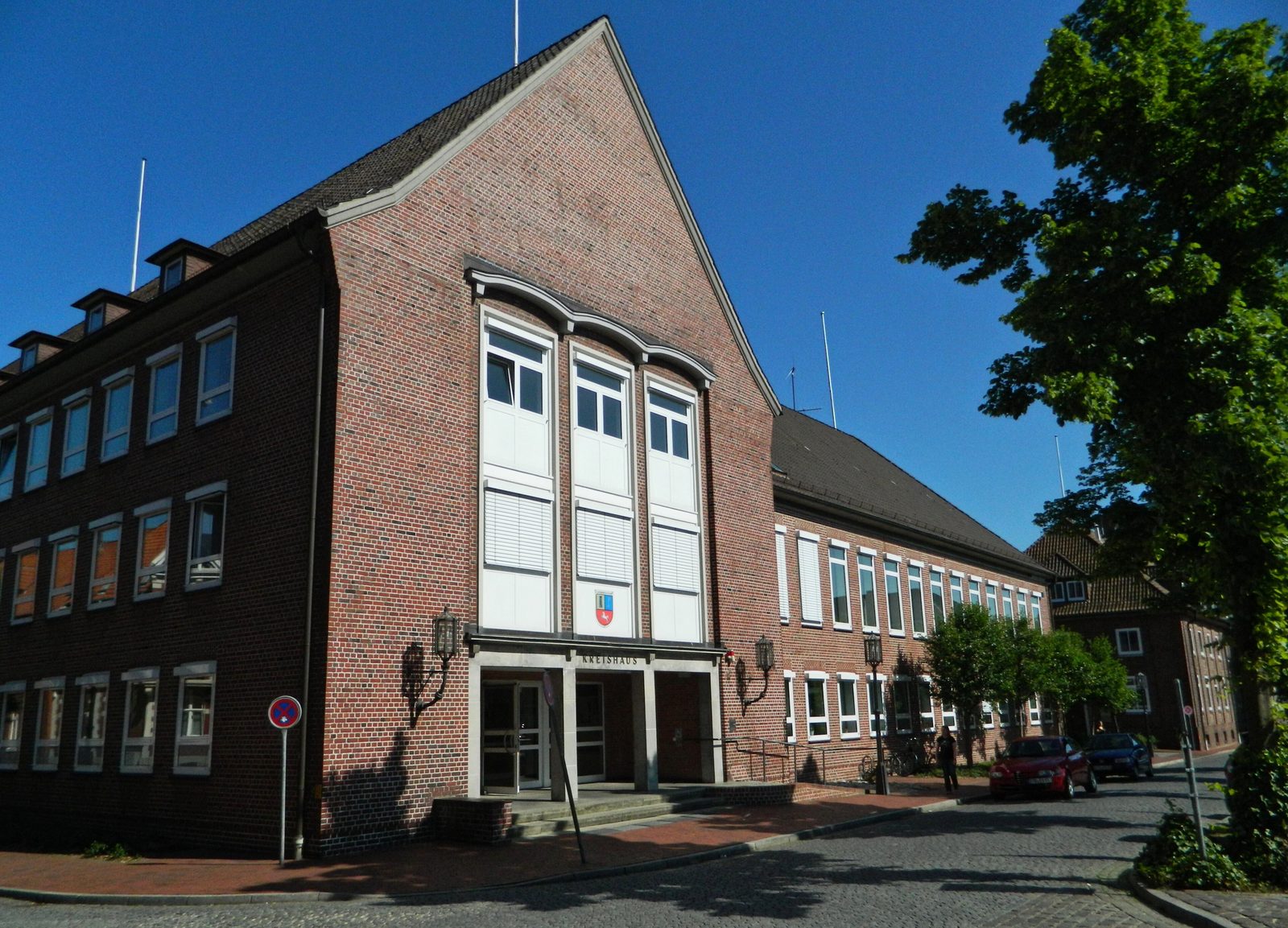
The administrative district outlived the empire, the Weimar Republic and National Socialism. In 1946 it became part of the new state of Lower Saxony and continued as the Lower Saxon administrative district of Stade until the reform of 1978 dissolved it. Until then the districts of Stade, Cuxhaven, Osterholz, Rotenburg (Wümme) and Verden had been administered from Stade. The “government building” on Bahnhofstraße, once the seat of the Prussian district president, recalls that role.
Garrison, officials, courts
Until heavy industry arrived in the early 1970s, the district government and the military shaped social life in Stade. It was an administrative and garrison town in which officials, officers and lawyers set the tone. That legacy can still be read in the density of state institutions: Stade has local, regional, social, administrative and labour courts, the state archive, the land registry office and an employment agency for a district that reaches far beyond the Landkreis. For a town of around 48,000 people that is unusual provision — and it goes straight back to the Landdrostei and the administrative district.
A canal that was never built
That Stade had not entirely forgotten its role as a port is shown by a project from between the wars: between 1919 and 1922 a plan was drawn up for a canal from the Mittelland canal near Bramsche via the Weser at Achim to the Elbe at Stade, first called the “Bramsche-Stade canal” and later the “Hanseatic canal”. It was never built; in the 1950s it was finally shelved. The town’s future lay not in canals but — a good half-century later — in chemicals, aluminium and aircraft construction on the Elbe.