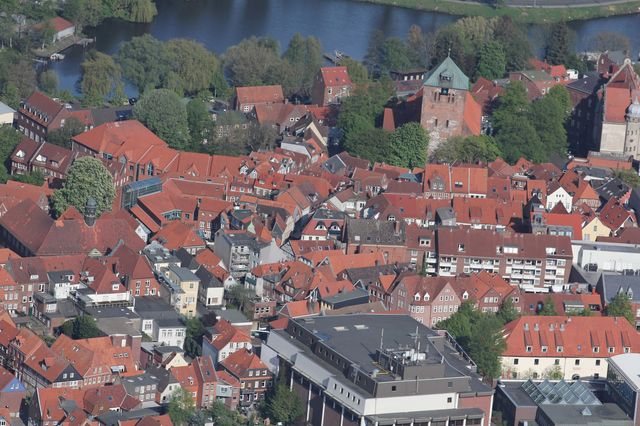
In the middle of Stade, only a few steps from the rampart, lies a small island in the moat. It is a relic of the Swedish fortress — and for more than a hundred years an open-air museum you can enter without a ticket and without opening hours. Right next door, on the rampart, stands the local history museum of 1904.
From bleaching ground to ravelin
Before the Swedes turned Stade into a fortress, the townspeople’s bleaching ground and a private one lay between the later bastions of Königsmarck and Gründel: meadows where the people of Stade bleached their washed linen in the sun. The two bastions were built in 1662, and between 1692 and 1694 the rest of the bleaching meadows became the Bleicher ravelin — an outwork in the moat. That is today’s island.
A curious episode belongs to its history: in the summer of 1773 the Göttingen philosopher and astronomer Georg Christoph Lichtenberg set up his field observatory here to determine the geographical position of Stade as part of the Hanoverian land survey.
Bathing house, inn, ferry punt
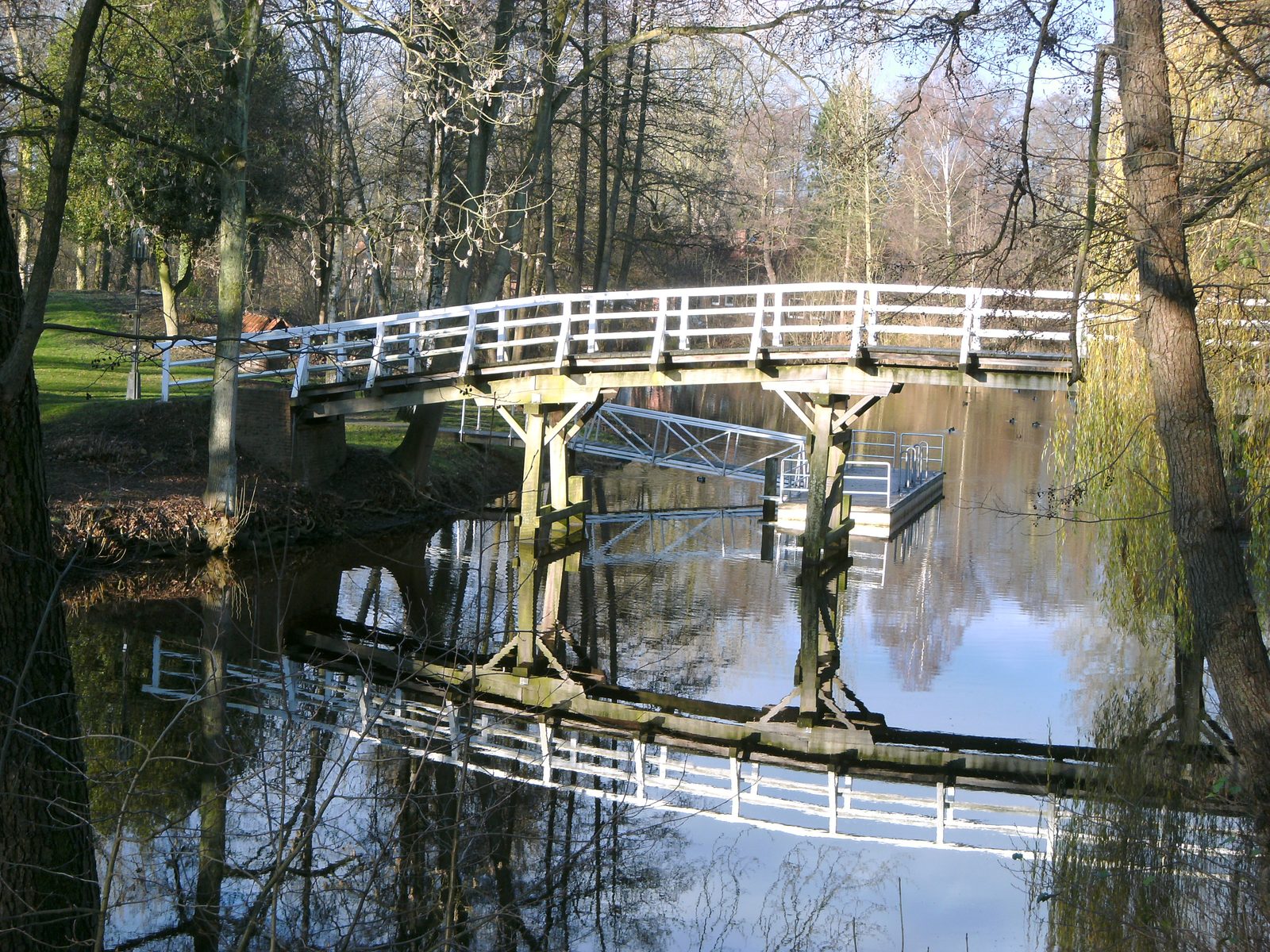
Once the military use ended, the island changed step by step: in 1825 a military bathing house was set up, and in 1846 the first inn opened, reached in those days only by a ferry punt. Later a bridge to Wiesenstraße and a floating bridge to Inselstraße linked the island to the town. As early as 1891 the town wanted to buy the site, but the military administration went on leasing it to the innkeeper Brauer.
A museum takes shape
From 1903 there were plans for an open-air museum; in 1908/09 mayor Ado Jürgens, who was also chairman of the history and heritage society, took the matter in hand. When the innkeeper’s widow gave notice on the lease, the town was able to acquire the island from the military in 1909. At first a domestic science school was to be built here — but boreholes showed bog soil down to six metres, and the school moved elsewhere. On 1 April 1910 the town granted the society a hereditary building right over the island.
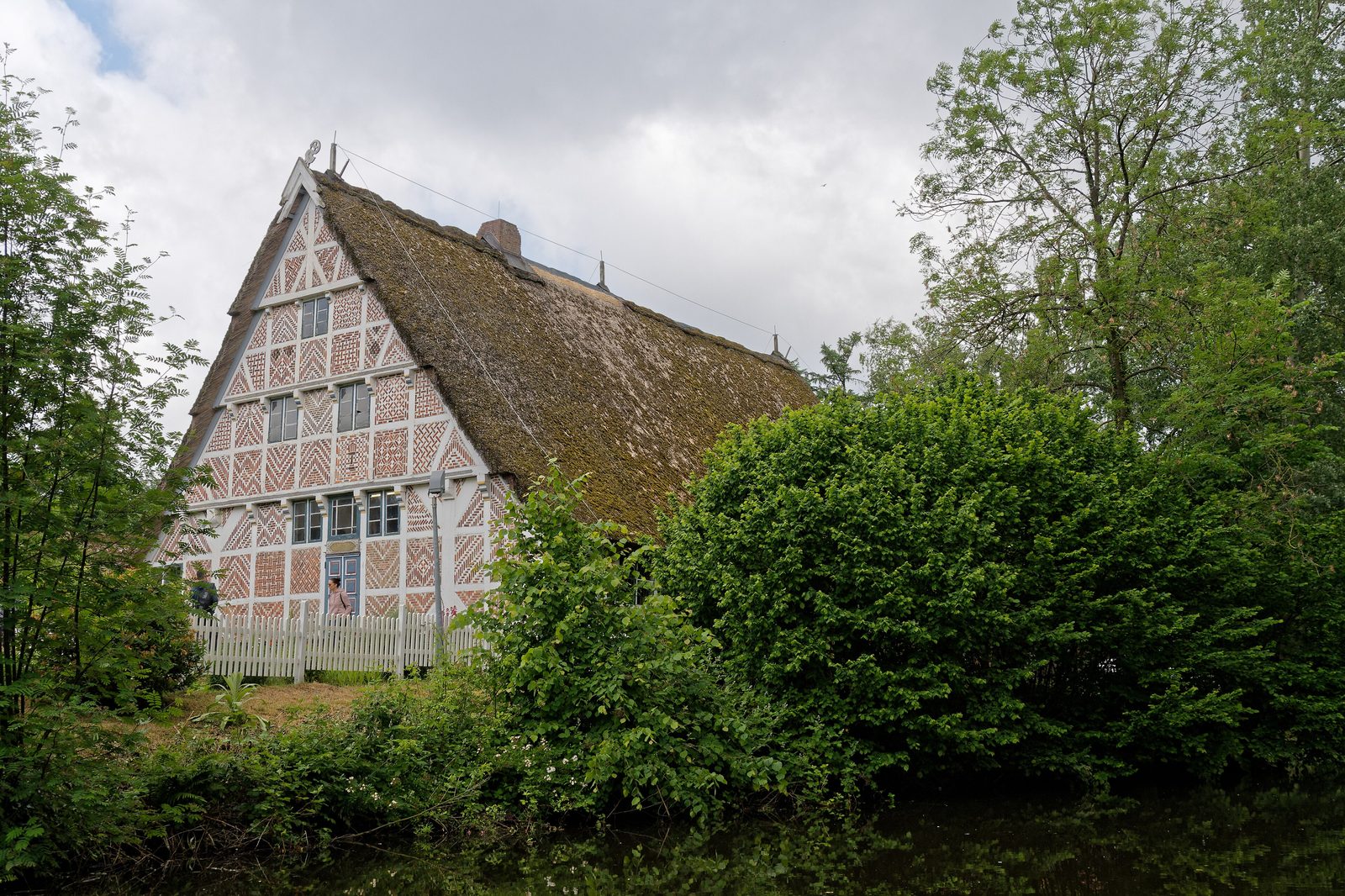
The layout was designed by the architect Emil Högg and the Bremen garden architect Christian Roselius. In 1912 the island inn was built, the Insel-Haus, a half-farm house of 1841 from Varel near Scheeßel. In 1913 the society acquired the Altes Land house, a marsh farmhouse of 1733 from Huttfleth in the Altes Land. In the same year the island inn burnt down — yet by 1914 both buildings stood on the island again.
What there is to see today
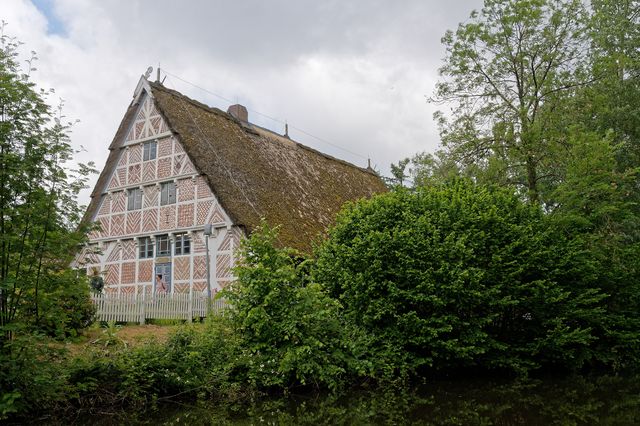
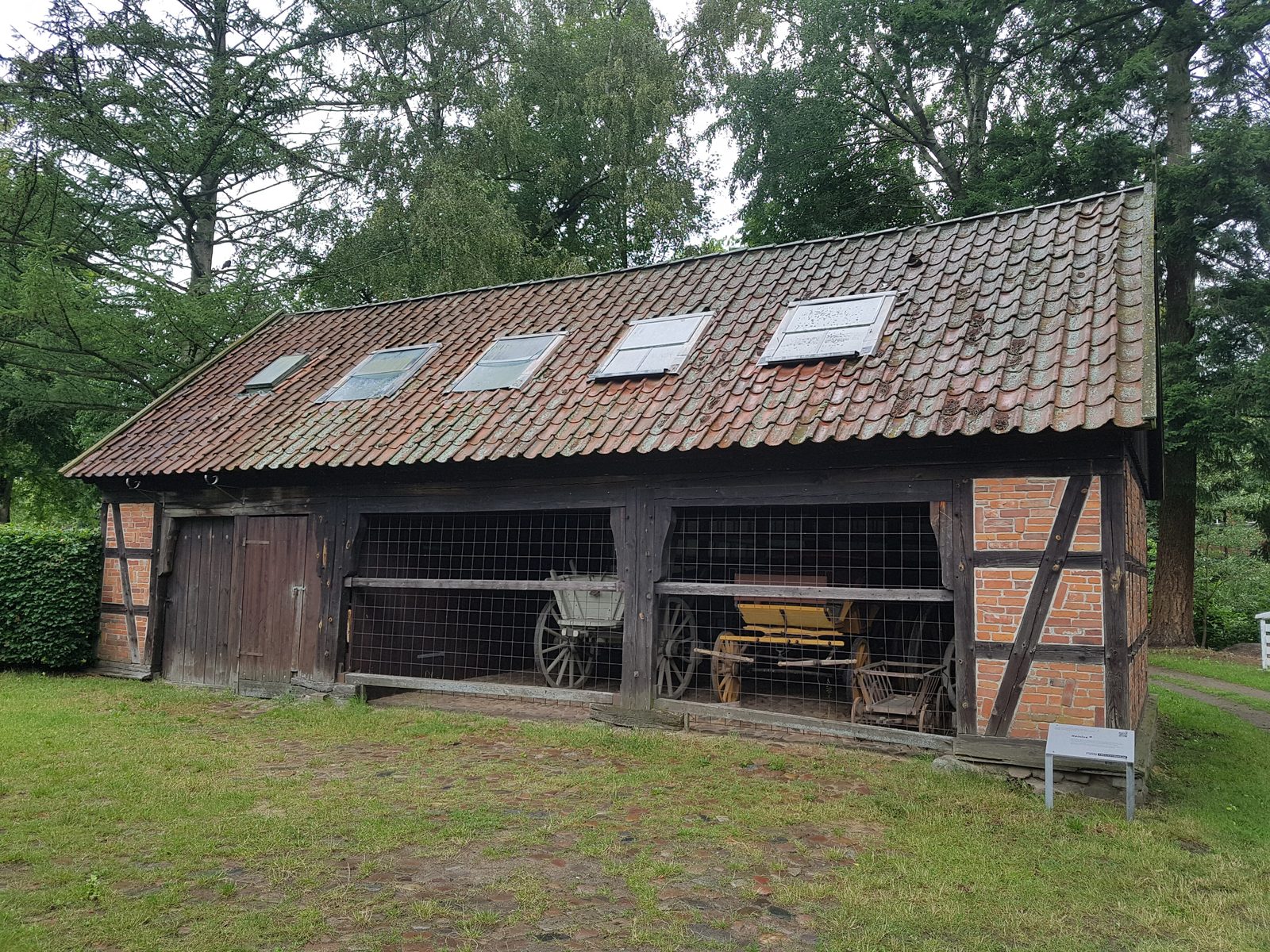
The Altes Land house is the centrepiece: a so-called Kübbung house with hall, hearth room and chamber section, whose triple-corbelled gable is richly decorated with coloured brickwork. In the summer half of the year it can be visited inside for a small charge. Further buildings came only from 1967: a post windmill of 1632 from Rethmar (1967), a horse-driven mill from the 17th century (1969), a stone bread oven (1970) and the Altes Land ornamental gateway from Twielenfleth of 1791 (1972). There is also a bee fence of the kind that once protected hives.
The island inn burnt down completely on 3 December 1992 after an arson attack. In its place the house Himmelpforten No. 6 was reconstructed in 1993/94, its gable dating from 1641.
The local history museum on the rampart
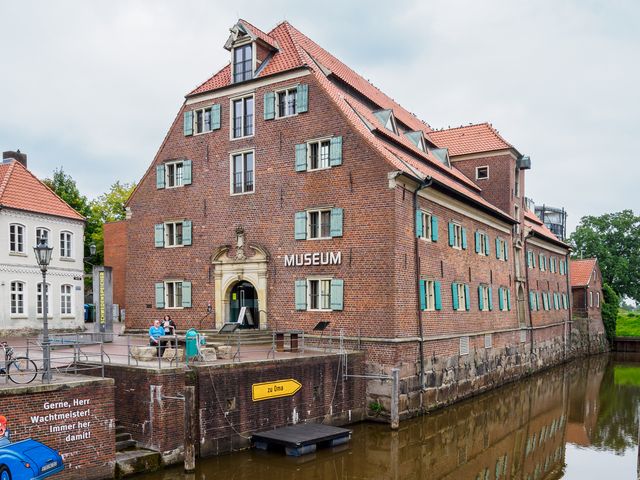
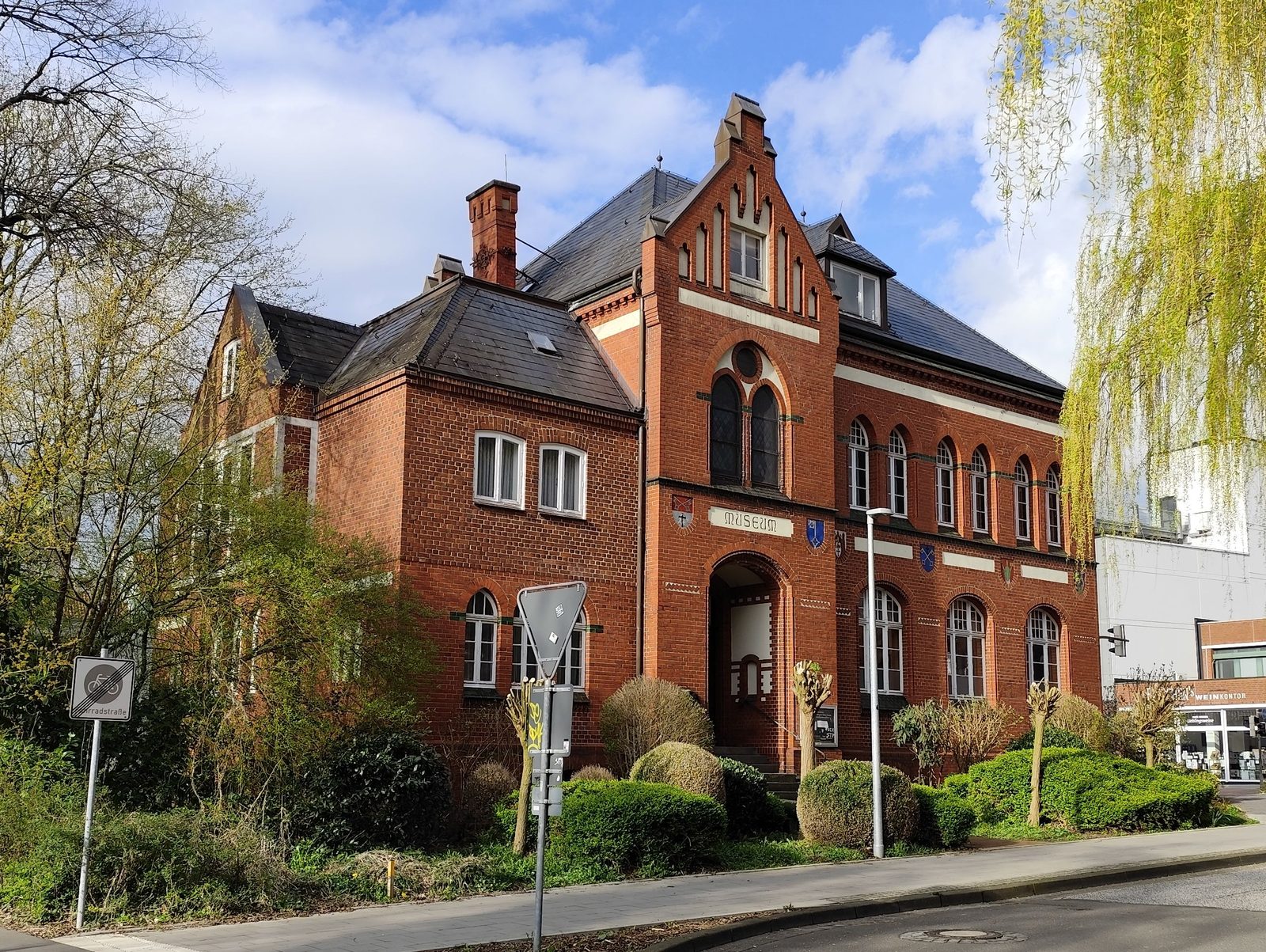
Not far from the island stands the local history museum, a neo-Gothic brick building of 1904. It is one of the museums the town lists in its overview — alongside the Schwedenspeicher museum by the Hanseatic harbour, the Kunsthaus on Wasser West, the museum ship Greundiek and the Grauerort fortress on the Elbe. Together with the island, the local history museum forms the green, quiet museum quarter on the edge of the old town that many visitors miss because it is not by the harbour.
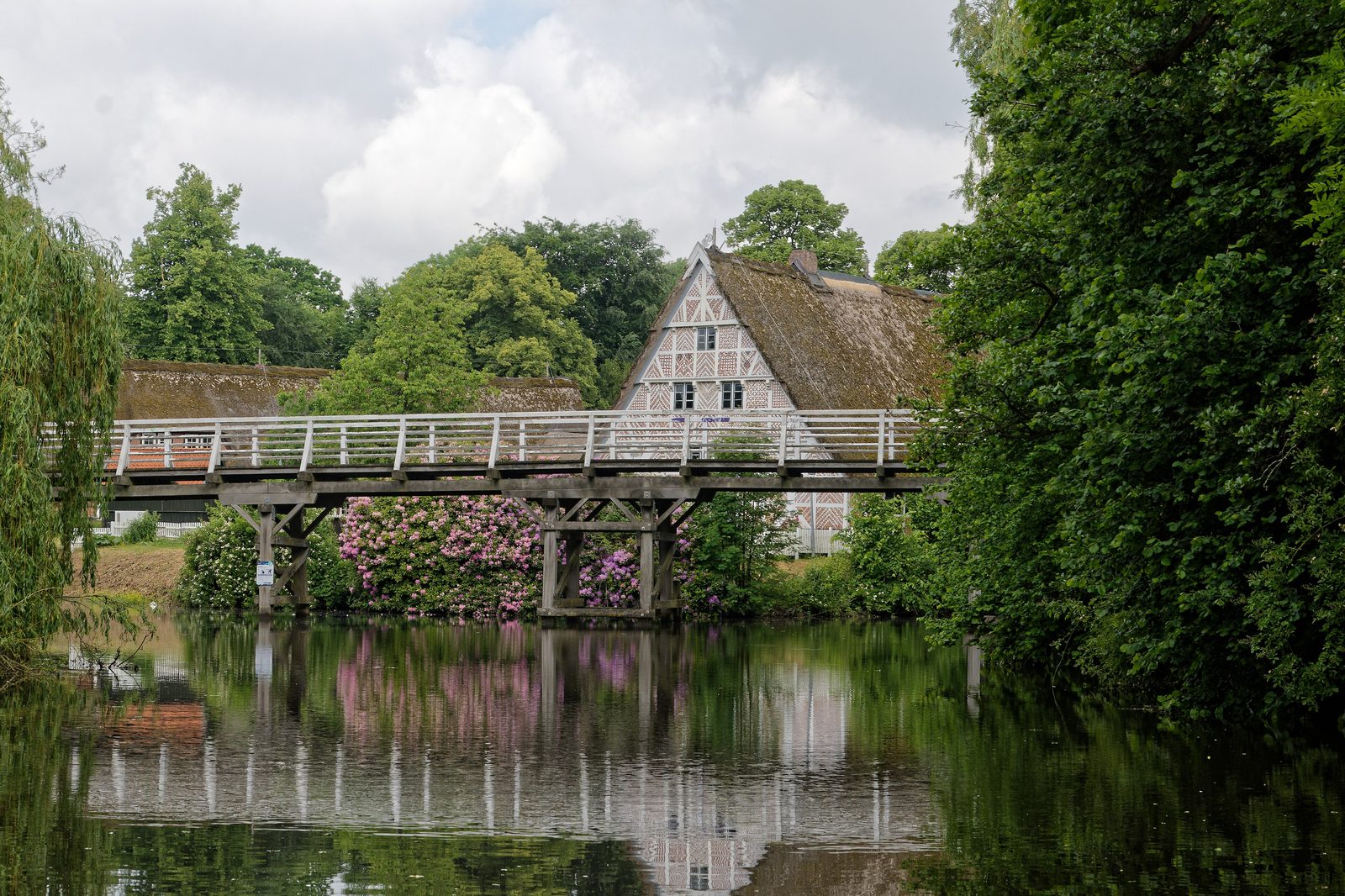
The best approach is from the rampart, over the wooden bridge. Come in summer and you can visit the Altes Land house inside; the open areas of the island are accessible all year round.
Gallery
Sources
- Wikipedia: Freilichtmuseum auf der Insel (10/2025)
- Wikipedia: Stade (Abschnitt „Museen“) (08/2026)