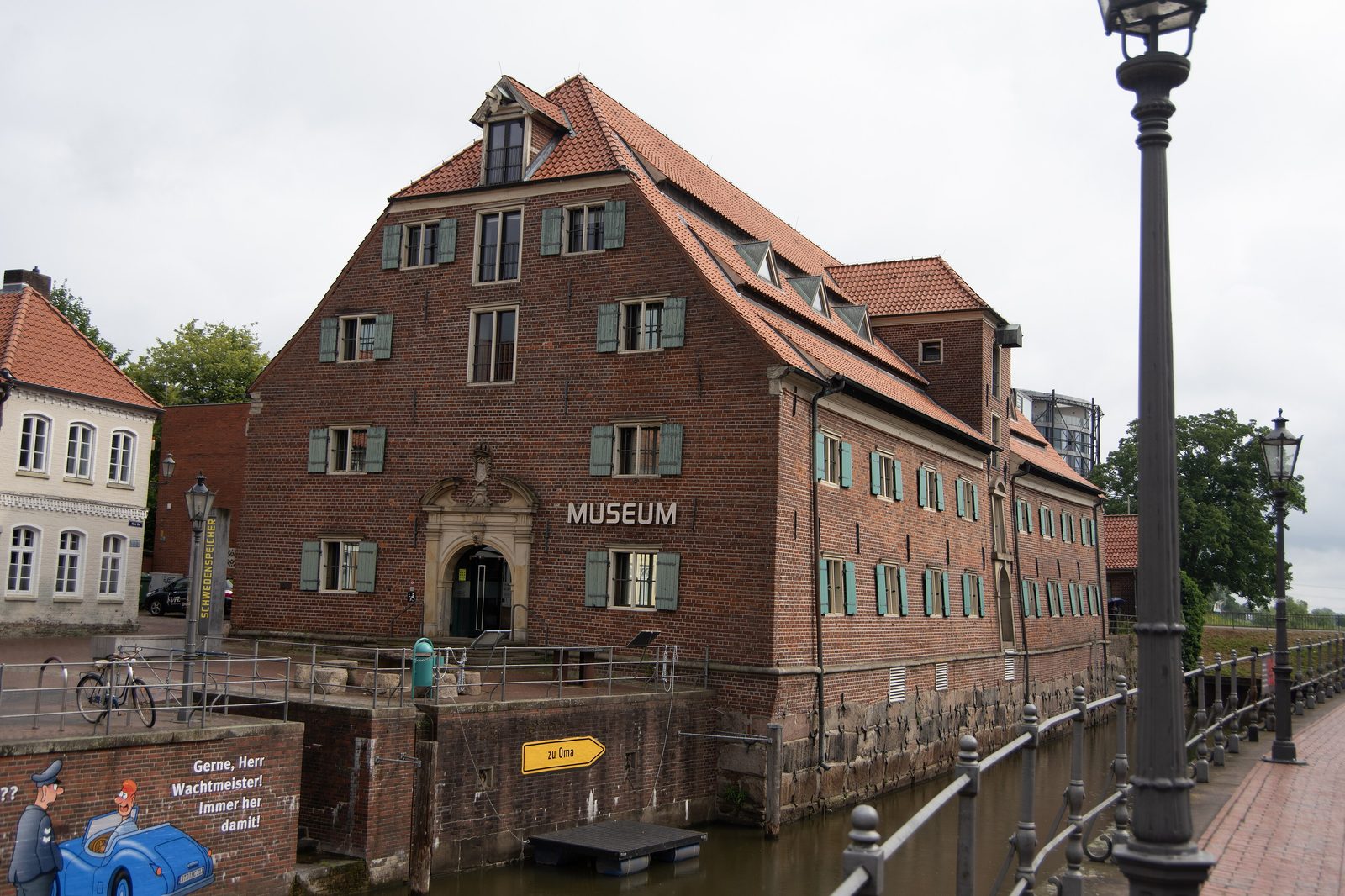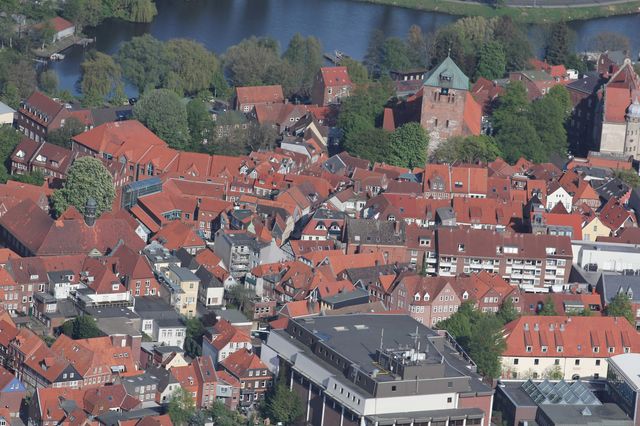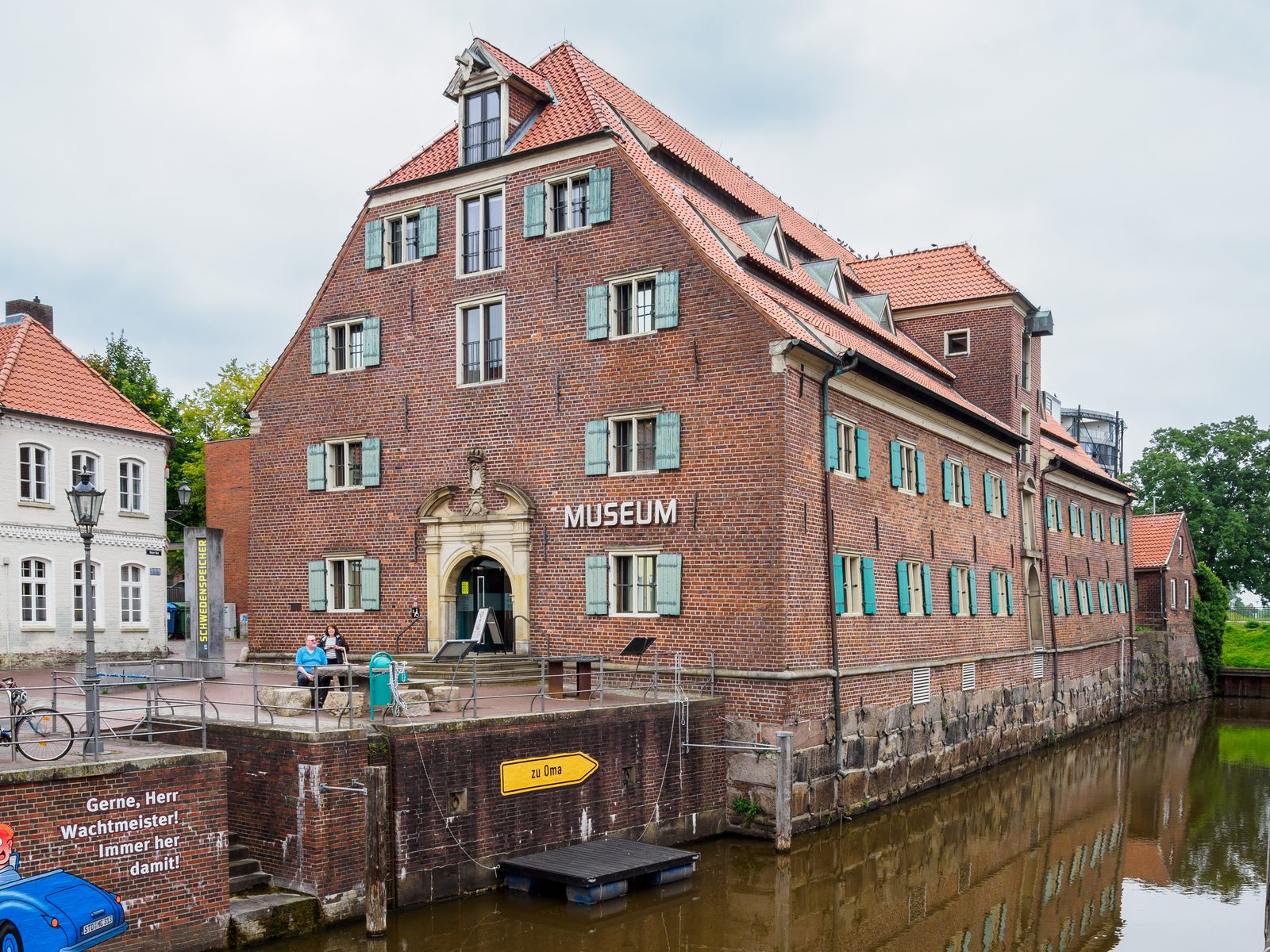
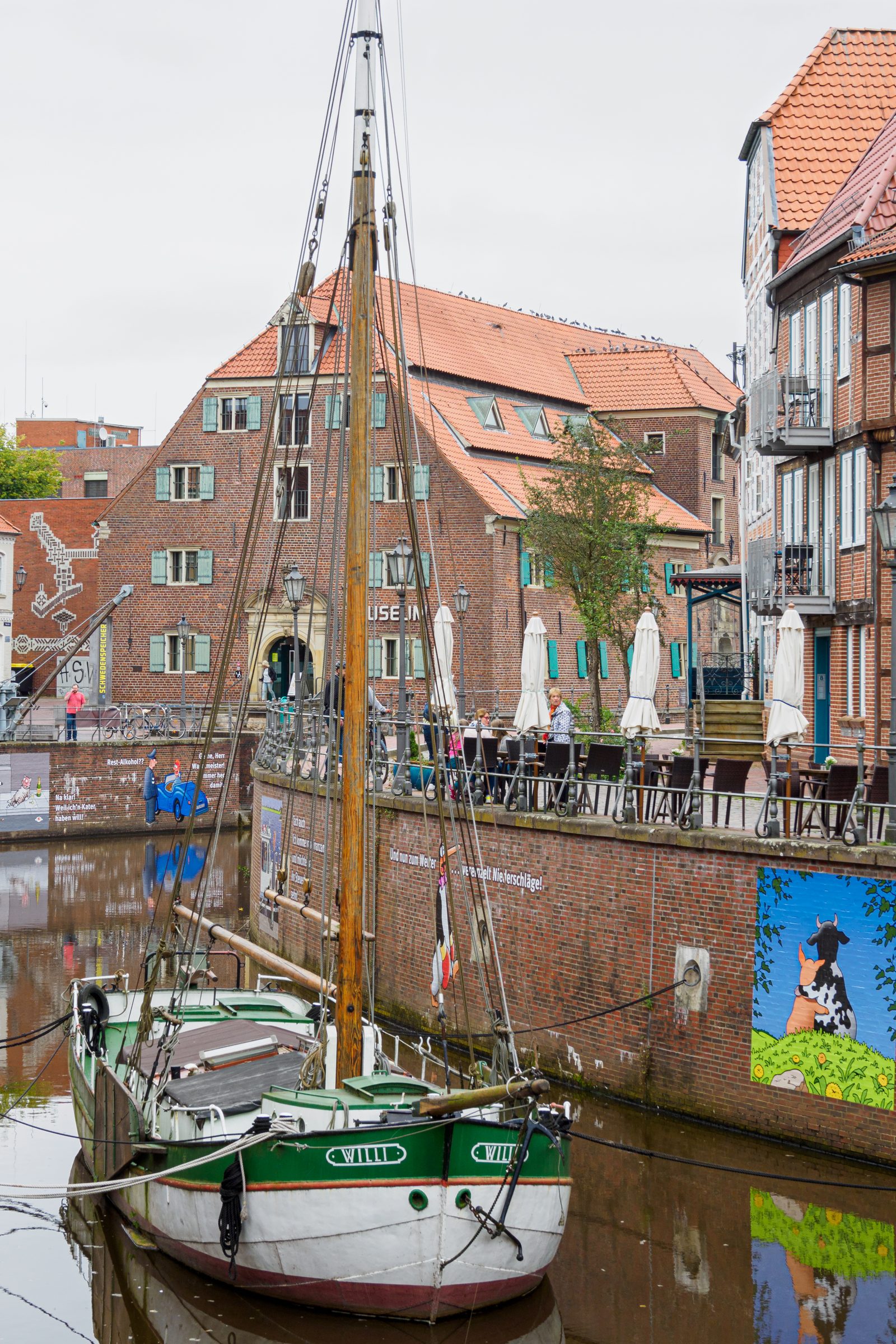
By the old Hanseatic harbour stands a massive brick building with a tall half-hipped roof that looks older than almost everything around it. Its history does indeed reach back to the time when Stade was a Swedish fortress town. Today the Schwedenspeicher houses the museum of archaeology and history of the Elbe–Weser region — and is itself one of the most important secular baroque monuments in northern Germany.
A store for the Swedish garrison
After the Thirty Years’ War the duchies of Bremen and Verden passed to the Swedish crown in 1648 as war compensation. Stade became the seat of the Swedish administration and was to be turned into a fortress. Troops and officials needed supplies, and supplies needed a roof. A first storehouse, built around 1660 on the grounds of the priory of St. Georg, did not meet requirements and was pulled down again. In 1690 the administration therefore bought three plots by the old Hanseatic harbour from the church of St. Nicolai. Until the great town fire of 1659, low dwelling houses had stood there.
Construction dragged on. Foundation work began in 1692 and the foundations were finished in 1694 — then the site lay idle for years, probably because money, materials and craftsmen were needed for other projects in the fortress town. A total of 8,000 reichsthaler was approved in 1699 and 1700, but work only resumed in 1703, under the master builder Luder Seebeck and the Swedish provisions master Ketelson. The work itself was carried out by the council’s master carpenter Andreas Henne and the master mason Anton Dreyer. More than 176,000 bricks from Bremervörde castle, demolished after 1682, were reused for the walls. At the end of November 1705 the building, including the clerk’s office on the ground floor, was ready for occupation; the final account showed building costs of 16,354 reichsthaler.
So anyone who reads in one place that the warehouse dates from 1692 and elsewhere that it was built in 1705 is right both times: one date is the start of building, the other its completion.
Only seven years in Swedish hands
The irony of history: the Swedish military administration used its provisions house as a grain store for a mere seven years. In 1712 the Swedish period on the lower Elbe came to an end. Stade, with all the buildings of that era, passed first to Denmark and in 1715 to the electorate of Hanover, whose military went on using the warehouse. In 1909 the town of Stade bought the building and leased it to cargo boatmen. When cargo shipping came to a halt in the 1960s, the warehouse lost its purpose and was in danger of decay.
From warehouse to museum
In the 1970s the wish to use the building as a museum grew. From 1975 it was thoroughly restored; in 1976 the Stade district, the town and the Stade history and heritage society founded a joint trust. On 30 November 1977 the Schwedenspeicher museum opened — fittingly for the town’s history, with a special exhibition on the Vikings. Since 2011 it has borne the name Museum Schwedenspeicher, and in 2012 the permanent exhibition was completely redesigned in the course of an interior refit.
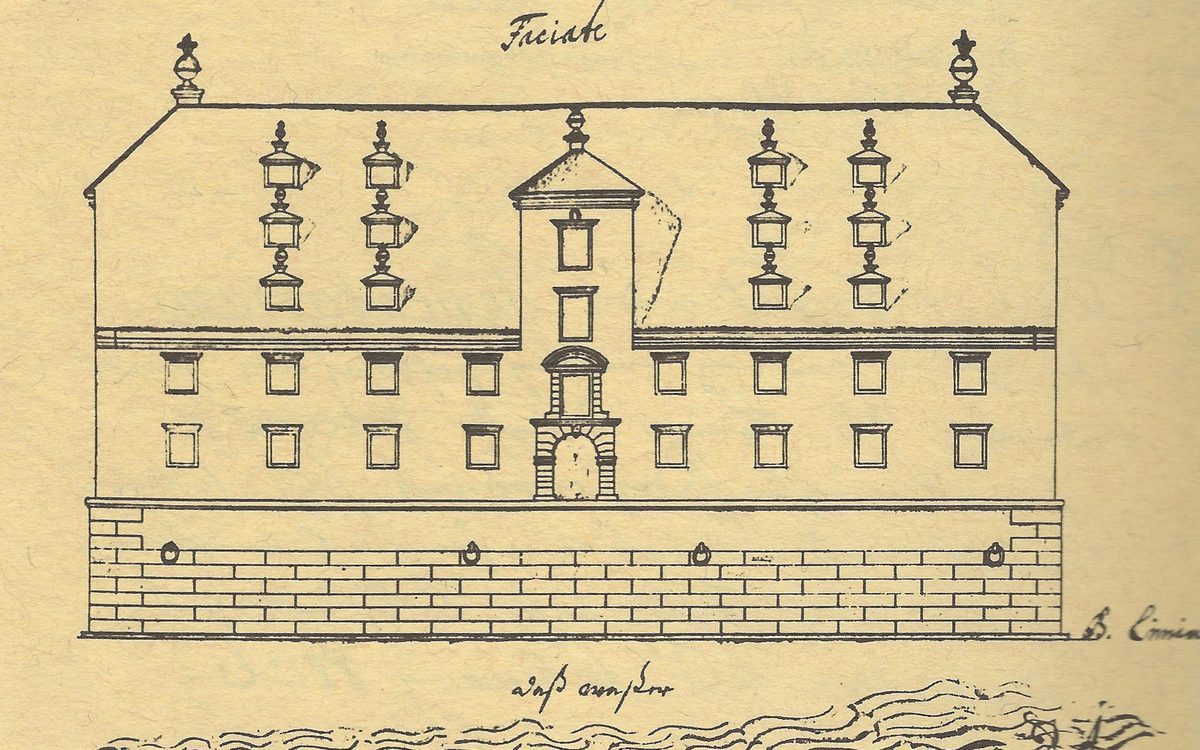
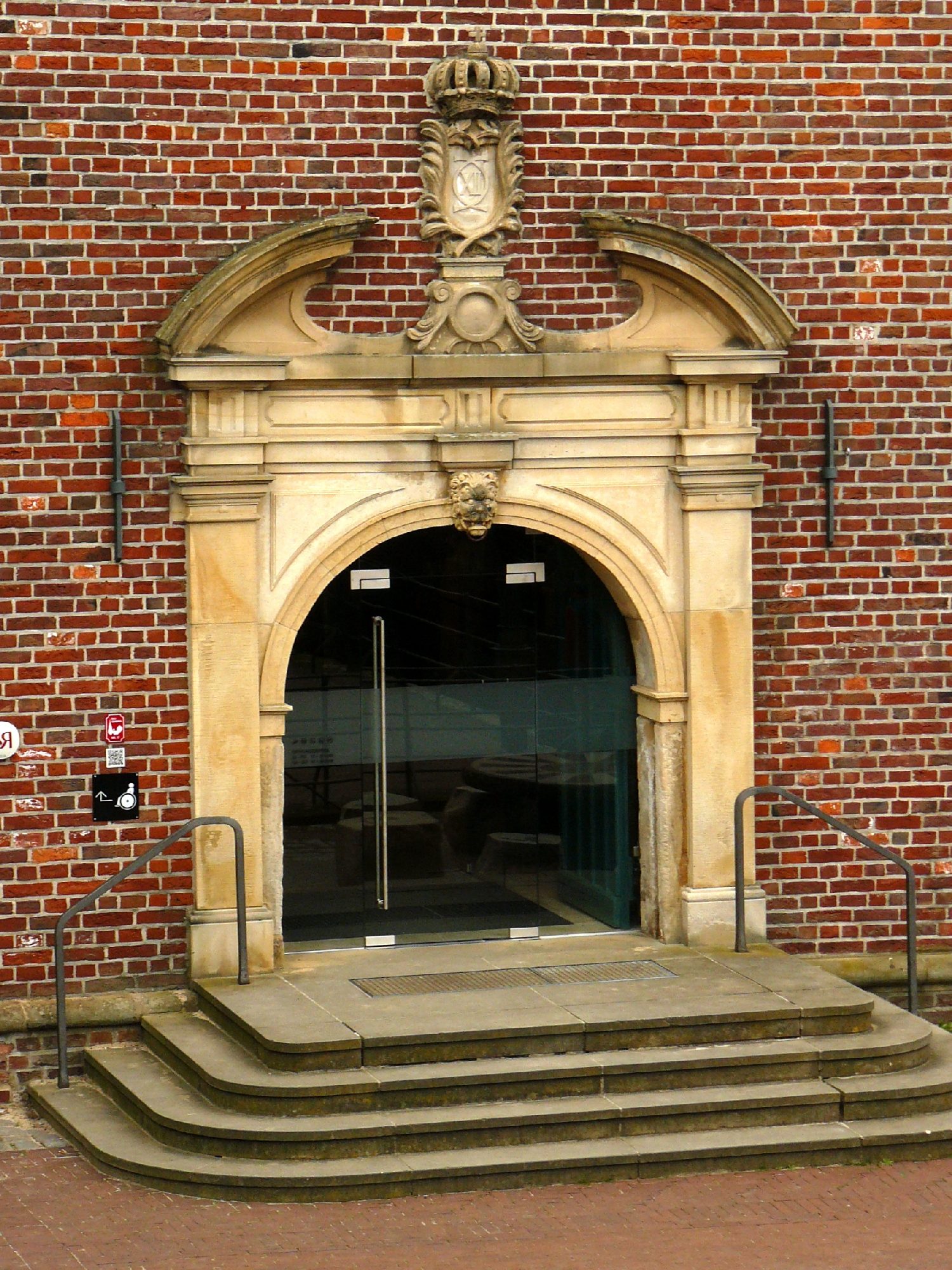
The building is itself an exhibit: 41 metres long, 16 metres wide, two full storeys and a tall tiled half-hipped roof that takes in two more levels and the attic. Inside, two rows of wooden posts carry the ceiling beams and divide the space into three aisles. The show front towards the Fischmarkt is adorned with a sandstone doorway with a segmental arch; above it sits a cartouche with the monogram C XII — for the Swedish king Charles XII — beneath a royal crown. A second sandstone doorway on the north side has been partly hidden since the 2012 refit by an external lift.
What there is to see
The ground floor is used for events and special exhibitions and tells the town’s history in compressed form — with finds from the Stade Hanseatic harbour that count among the significant harbour assemblages of Europe. The first floor is devoted to the Hanse; among other things there is a model of the “Adler von Lübeck” at a scale of 1:50, and the state of Hanseatic research is explained using Stade as an example.
The second floor belongs to archaeology: on display are the clothing of the Iron Age bog body known as the man of Obenaltendorf, the four Stade bronze wheels from around 1000 BC, the Neolithic gold armring from Himmelpforten, the flint dagger from Wiepenkathen and the grave goods from the princely burial at Apensen and the warrior’s grave at Harsefeld. A special piece is the gold coin discovered near Fredenbeck in 2017 bearing the portrait of Emperor Constantine I, struck in 342/343 in what is now Croatia — a unique example worldwide. Above lie the administration, an event room and the museum library.
The museum’s work has been recognised several times: in 2013 with the museum prize of the Lower Saxony savings bank foundation, in 2015 and 2022 with the quality mark of the museums association of Lower Saxony and Bremen; the exhibition guide published in 2012 received a Red Dot Design Award.
The Schwedenspeicher stands at the end of the Wasser West pedestrian zone, only a few steps from the Bürgermeister-Hintze-Haus and the treadwheel crane — more about them under Sights.
Gallery