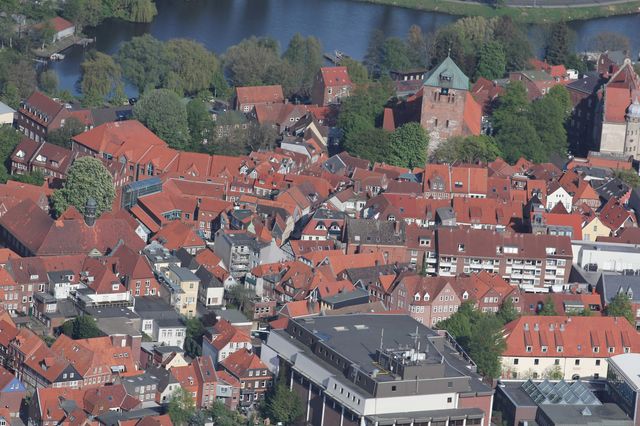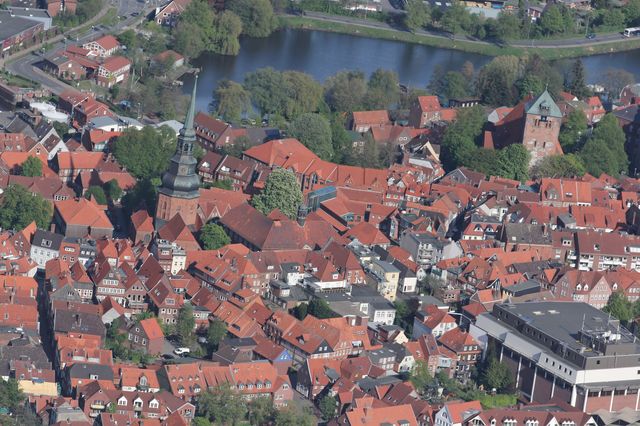
If you hear sentences in Stade — at the till, at the weekly market, over the garden fence — that sound like German and still cannot be understood, you have probably heard Platt. In Low German, Stade is Stood, the Altes Land is Olland and Jork is Jörk. In the north this speech is older than standard German, and it is not lazy mumbling but a branch of West Germanic in its own right.
Language or dialect?
Plattdüütsch — Platt for short, Low German or Low Saxon in scholarly usage — never went through the second sound shift, the change that produced High German in the south. Historically it therefore stands beside Dutch, Frisian and English rather than beneath German. Internationally it carries its own language code: nds.
Whether to call it a language or a dialect is still answered differently in the literature; the main counter-argument is that no supra-regional written Low German has existed since the 16th century. Politically the question is settled: since 1999 Low German has been protected in Germany by the European Charter for Regional or Minority Languages. Eight federal states signed for it, Lower Saxony among them.
Stood, Olland, Hornborg: Platt on the map
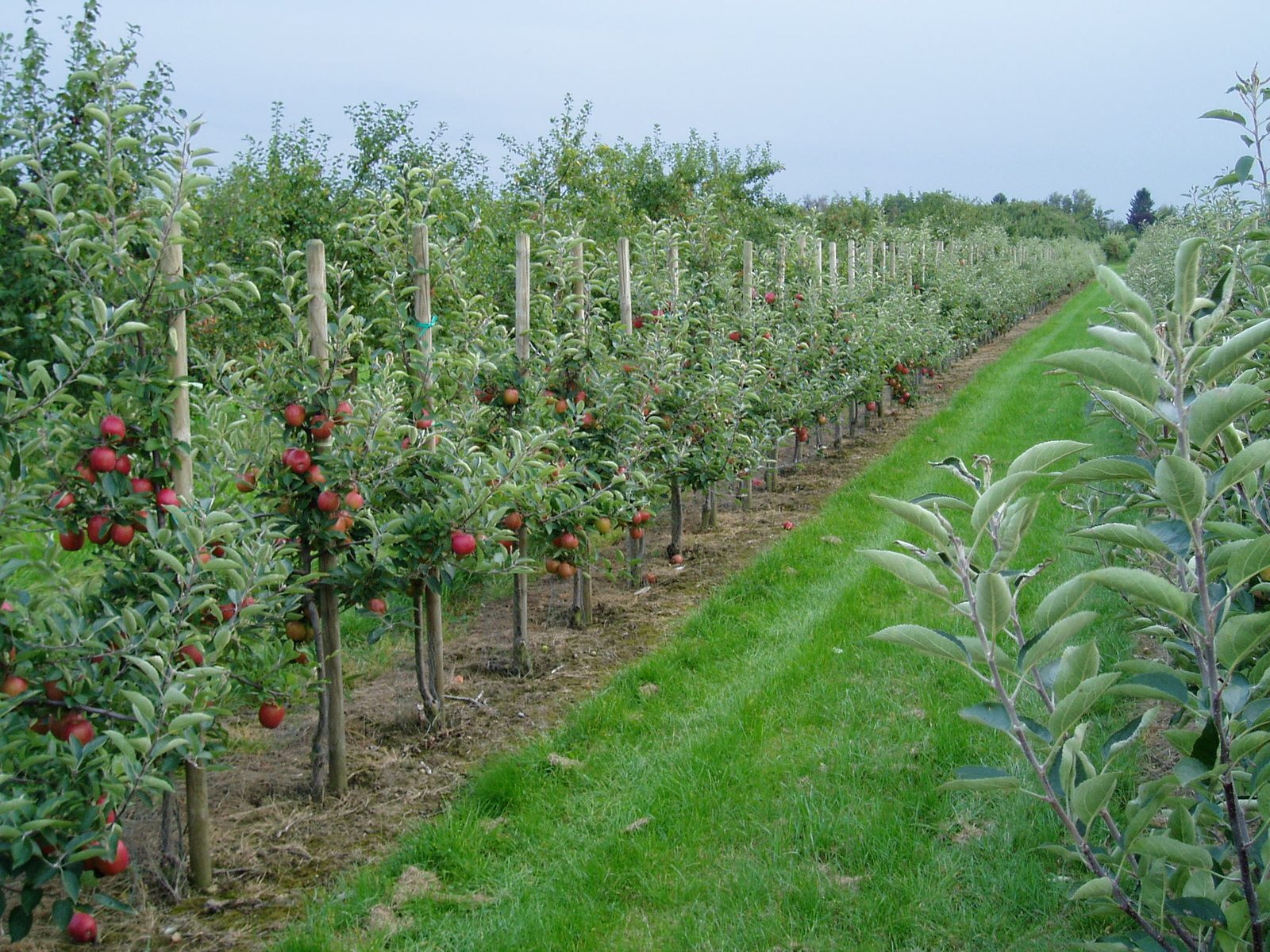
Many places around here have a Low German name form that is still in use: Stade is Stood, Jork is Jörk, Horneburg is Hornborg, Freiburg on the Elbe is Fryborg, Krummendeich is Krummendiek. The Altes Land has one too: Olland, the „old land“ — originally the counterpart to newly reclaimed land, an echo of the Dutch colonists who settled here between 1130 and 1230.
In fruit growing, Platt survives in the technical vocabulary. The starlings that fall upon ripening cherries in early summer are called Spreen here; „Spreenhüten“ — guarding the crop with hand rattles, shouts and later with clattering wind mills — was a job of its own for generations.
Why Platt held on precisely here
Until the 16th century Middle Low German was the written language of the Hanseatic League — the language in which merchants from Novgorod to Bruges drew up their contracts, and which left hundreds of words in the Scandinavian languages. Stade lived off that trade; neither its town charter history nor its Hanseatic harbour can be explained without it.
As the League declined, the northern German towns and their chanceries switched to High German; schools, administration and finally the mass media followed. Since the 1960s the number of active speakers has fallen sharply. Platt has held on above all near the coast, as a language of closeness, family and neighbourhood — in East Frisia, in Dithmarschen and in the Elbe-Weser triangle, which is exactly here.
Deele, Flett and Ulenlock
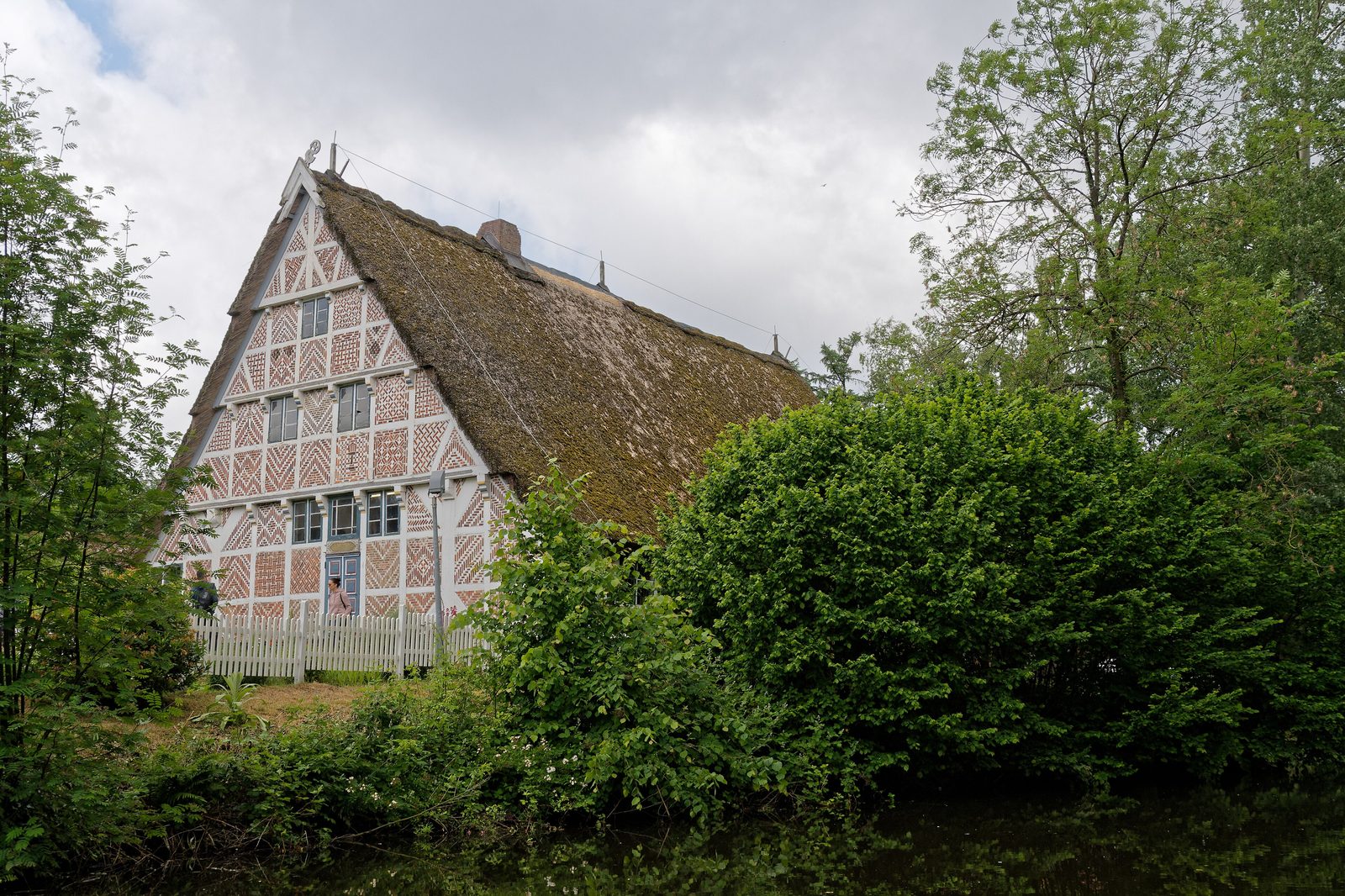
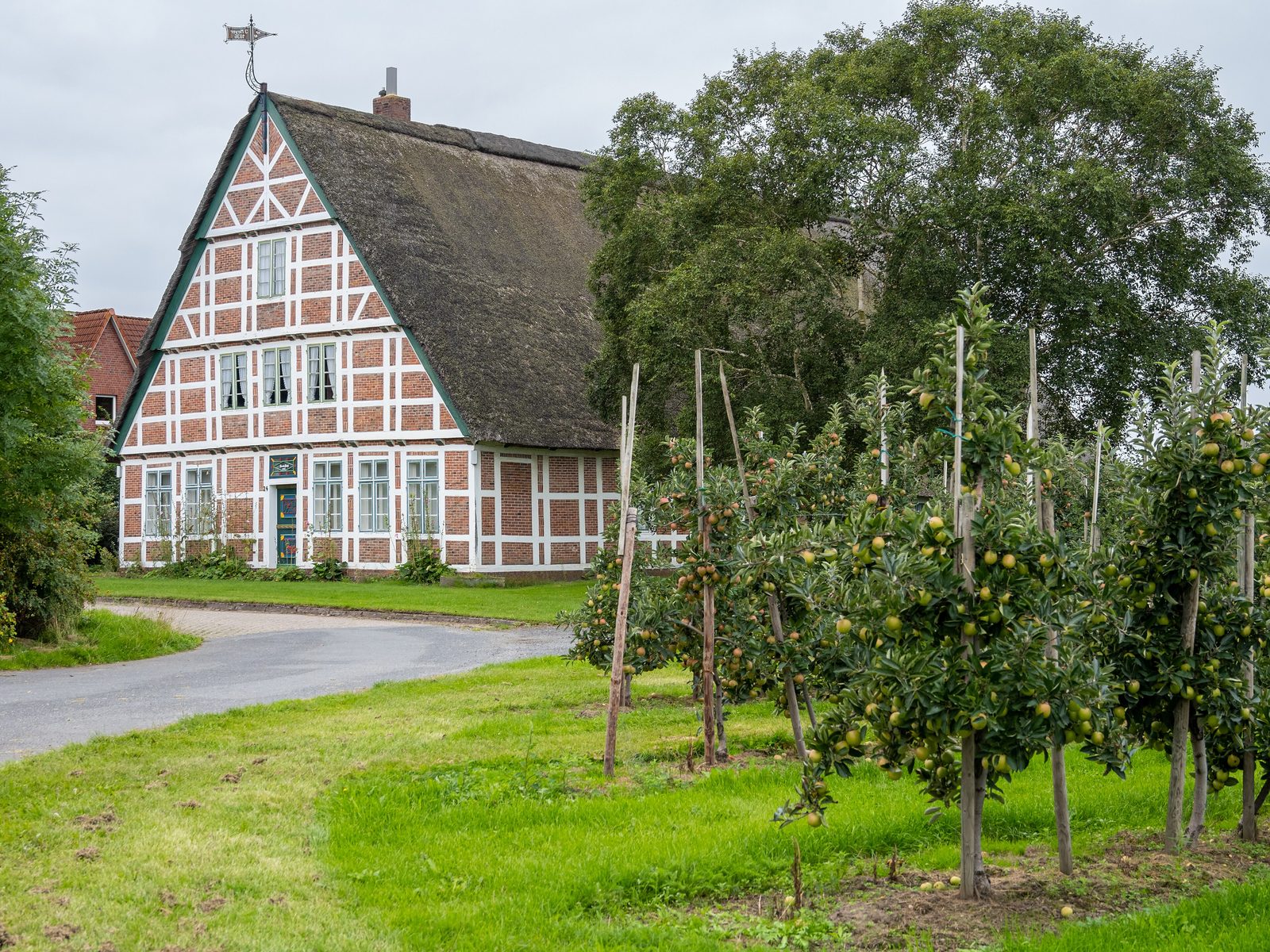
Anyone visiting the open-air museum on the island walks through Low German words. The great gable door of a hall house is the Grote Dör; behind it begins the Deele, the working hall of the farm, where grain was threshed, flax broken, feasts held and the dead laid out. At its far end lay the Flett, the open living kitchen with the hearth in the middle of the room — the word comes from Middle Low German vlet, „floor“. The smoke left through an opening in the gable, the Ulenlock, the owl hole.
One theatre programme even carries this floor plan in its name: „Theater auf dem Flett“ is the Low German stage that the Landschaftsverband Stade sends around the local heritage houses of the Elbe-Weser triangle.
How many still speak it?
Exact figures do not exist, because language competence can only be captured through self-assessment in surveys. For 2009 the Institute for Low German Language put the number at some 2.6 million people in northern Germany — 14 per cent — who speak Platt well or very well; a further 20-odd per cent speak it moderately, and about three quarters of the population in the language area understand it. For comparison: a 1984 survey still counted around eight million speakers.
In Hamburg, Schleswig-Holstein and Mecklenburg-Vorpommern, Low German is an elective school subject; in Lower Saxony it is woven into other lessons. Since 2017 it has been recognised by the standing conference of education ministers as an oral and written examination subject in the Abitur.
Where to hear and learn Platt
The Landschaftsverband Stade has long worked for the language: it runs theatre seminars for adults and for young people — the youth group „Wellenbreker“ performs mainly on school stages — and then tours the plays through the region's heritage houses. Nationally, the Institute for Low German Language in Bremen collects everything published in Platt: its reference library holds more than 45,000 items. The institute is also behind the Plattolio learning platform, the Plattsounds band contest, a sound archive and a Low German map on which place names can be heard spoken aloud. Twice a week the radio carries the news in Platt.
And for anyone who wants to write it: in Lower Saxony the spelling laid down by Johannes Saß, together with its dictionary for North Low Saxon, is binding. Getting started sounds harder than it is — the plural has a single form for all persons: wi maket, ji maket, se maket, „we make, you make, they make“.
Gallery
Sources
- Wikipedia: Niederdeutsche Sprache (Abschnitte „Schriftsprache und heutiger Schutzstatus“, „Schulfach“, „Anzahl der Sprecher“) (09/2026)
- Wikipedia: Nordniederdeutsch (08/2026)
- Wikipedia: Landschaftsverband Stade (09/2026)
- Wikipedia: Institut für niederdeutsche Sprache (04/2026)
- Wikipedia: Hallenhaus (Abschnitte „Diele“, „Küche (Flett)“) (09/2026)
- Wikipedia: Altes Land (Abschnitte „Name“, „Obstbau“) (08/2026)
- nds.wikipedia: Plattdüütsch (09/2026)