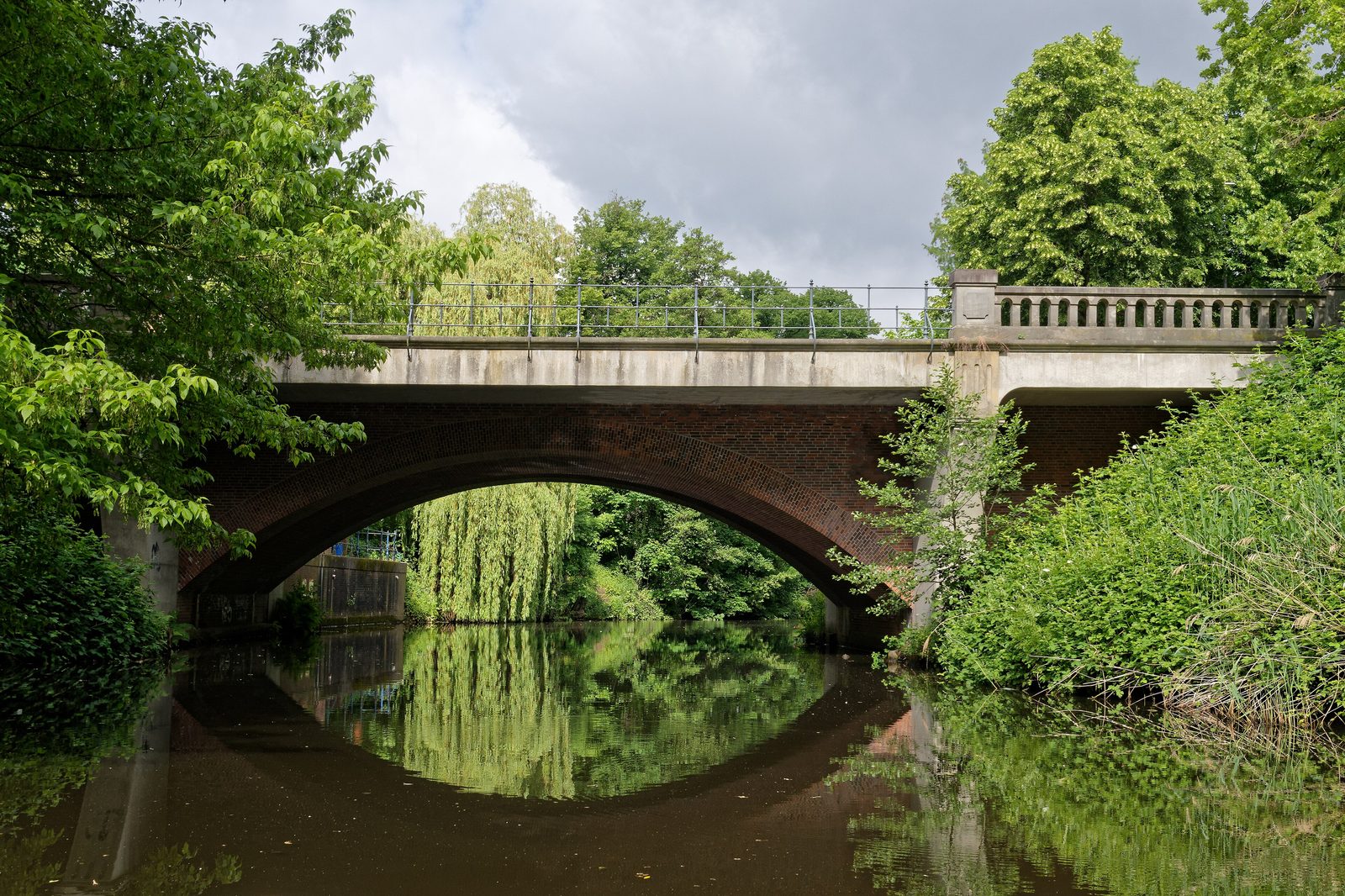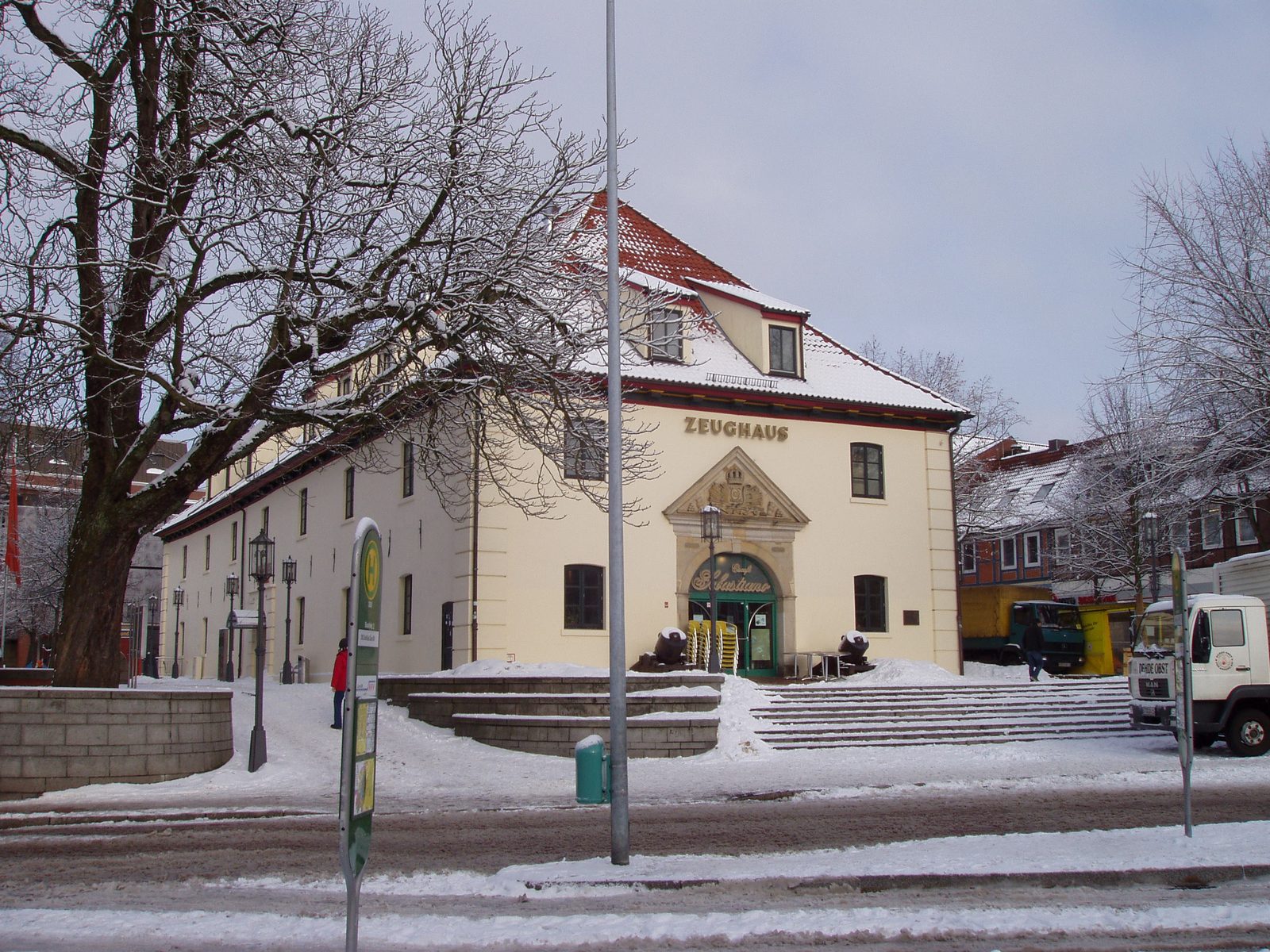
Walk around Stade’s old town today and you follow a watercourse with weeping willows, rowing boats and old bridges. Almost nothing recalls that this moat was once part of one of the most important fortresses in Swedish northern Germany. One building, though, still stands: the arsenal on the Pferdemarkt, built in the last years of the Swedish period — and erected on top of a church.
An island in the Schwinge
Stade’s old town lies on an island. The Schwinge and the moat enclose the historic core within the former ramparts. The place was fortified early on: after the counts of Stade died out, the town fell to Henry the Lion, who united it and surrounded it with a rampart and a ditch. The medieval Hanseatic town managed with that for a long time — until the Thirty Years’ War and the Swedes changed everything.
The Swedish fortress
Danish troops moved in in 1625, in 1628 Tilly took the town for the Catholic League, shortly afterwards the Swedes held it until 1636, then the Danes again. In February 1645 the Swedes took Stade for good; the Peace of Westphalia of 1648 awarded them the duchies of Bremen and Verden, and Stade became the seat of government. The governor-general was Hans Christoph von Königsmarck, a successful commander of the war whom Queen Christina raised to the rank of count in 1651 — outside the town gates he had the small palace of Agathenburg built, named after his wife Agathe.
Sweden wanted to turn Stade into a fortress. The great town fire of 26 May 1659, which consumed two thirds of the town, almost became the occasion for it: the town was rebuilt on its unchanged plan, and at the same time the Swedish fortifications went up, parts of which survive to this day. That the fortress was taken seriously was shown by the Swedish-Brandenburg War: from the beginning of April to 13 August 1676 Stade, the seat of the Swedish governorship, lay under siege, remained in enemy hands until 1679 and then returned to Sweden under the Peace of Saint-Germain.
The arsenal on the Pferdemarkt
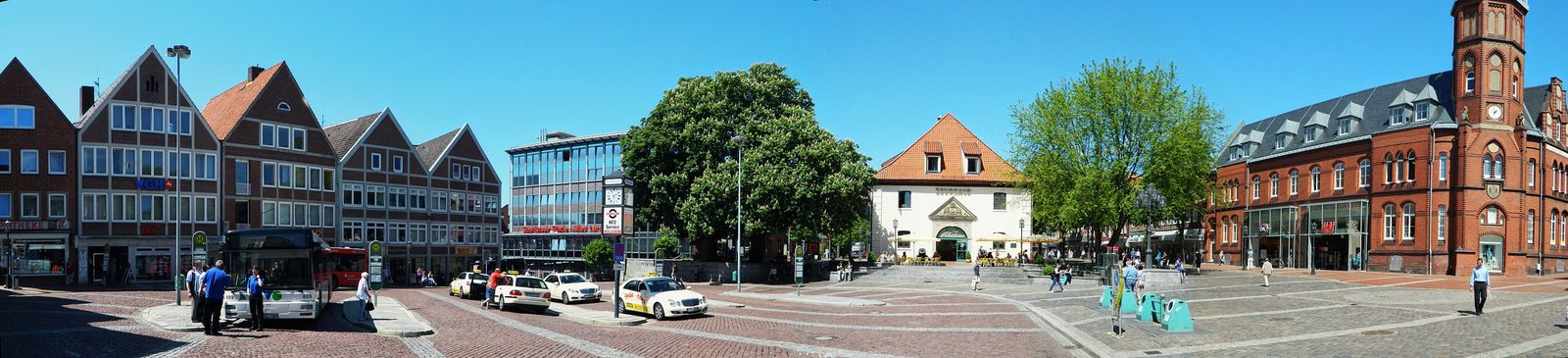
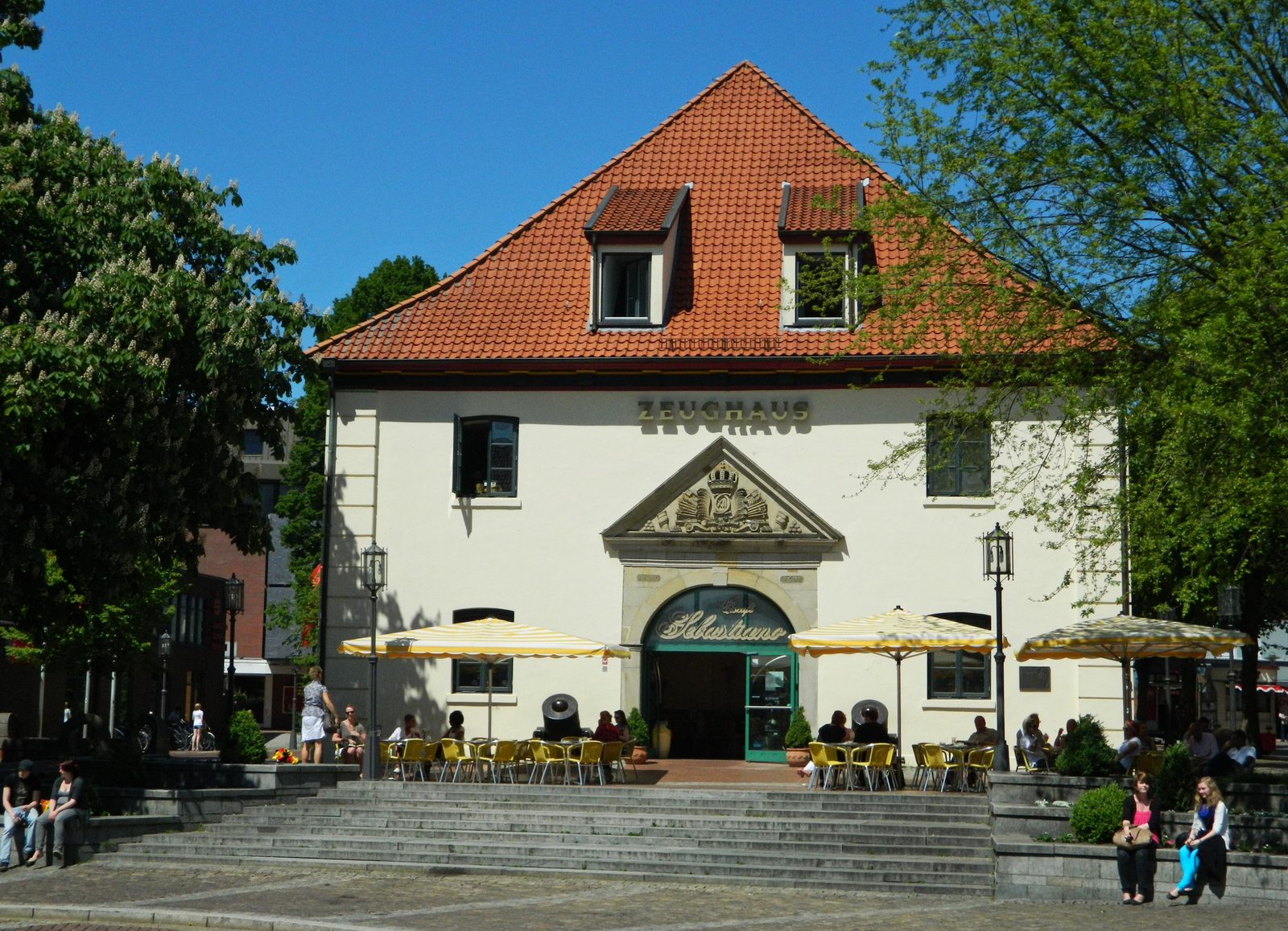
Between 1697 and 1699, right at the end of the Swedish period, the arsenal was built on the Pferdemarkt as the garrison’s armoury. The site had a history: the 12th-century church of St. Georg stood here before, the church of the monastery quarter whose monks had done much to advance the Reformation in Stade in the 16th century. In 1363 the Bremen archbishop Gottfried von Arnsberg, who had died in Stade, was buried in St. Georg — his grave survives in the basement of the arsenal to this day.
The arsenal outlived the fortress by centuries. Until the end of the 1980s it served as a cinema and as a concert and theatre building; today it is a listed monument used for hospitality in the middle of the central old-town square. Two cannon in front of the entrance recall its original purpose.
1712: the end under bombs
Swedish rule ended in the Great Northern War. From 29 August to 7 September 1712 Danish troops besieged and shelled the town; 152 houses, a quarter of the built-up area, were destroyed. Stade passed to Denmark and, in 1715, to Hanover. The Swedish warehouse by the harbour, completed only in 1705, had served the Swedes as a provisions house for just seven years.
From rampart to park
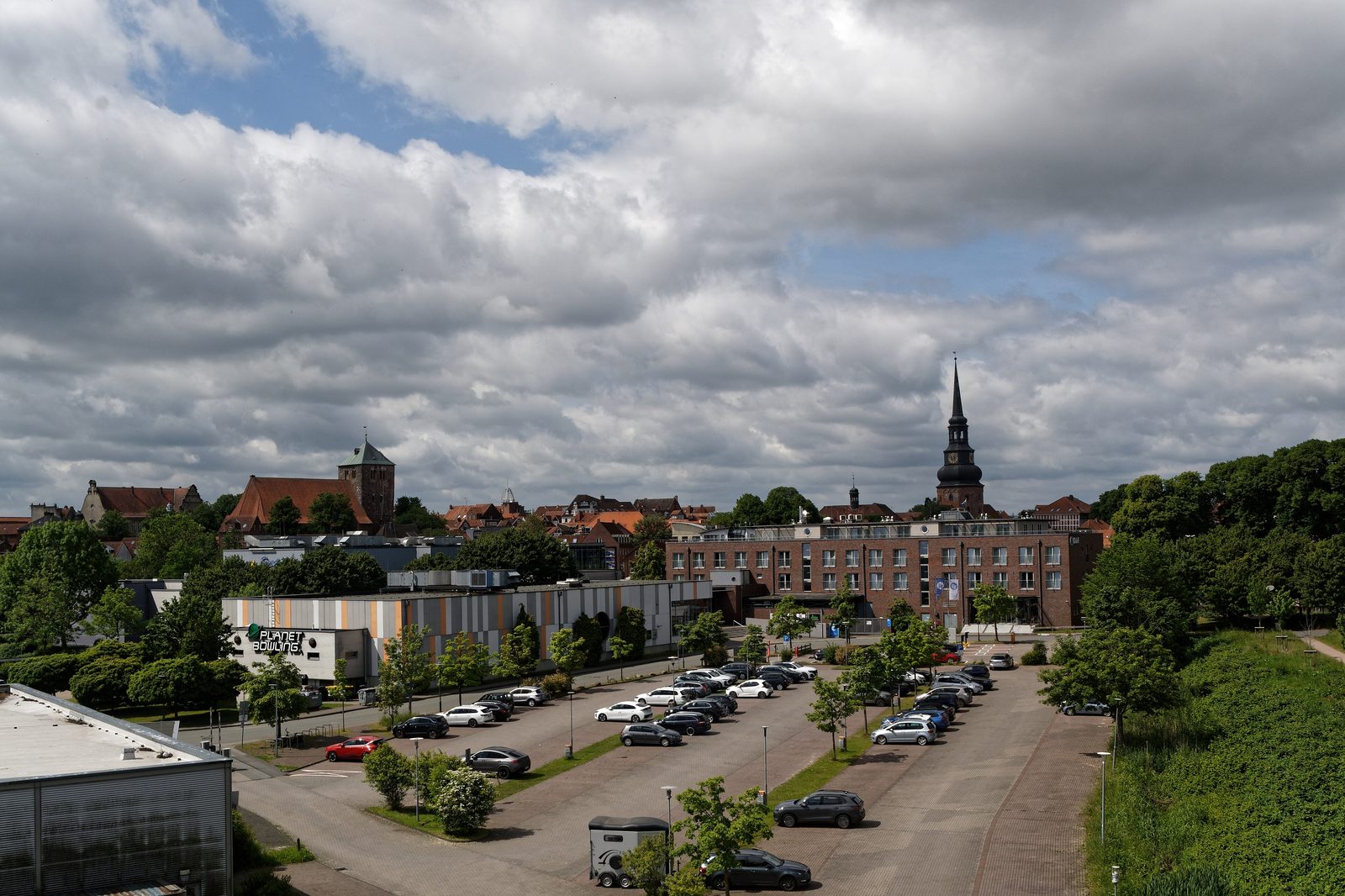
Once the fortress had lost its military point, the defences turned green. At the end of the 19th century the town converted the fortifications into parkland — and at the same time grew beyond them: along the arterial roads arose the Kehdingertor suburb in the north, the Hohentor suburb in the south and the Schiffertor suburb in the west; the names of the old town gates live on in them. The local history museum stands on one of the bastions, and the moat still carries names such as Güldenstern bastion.
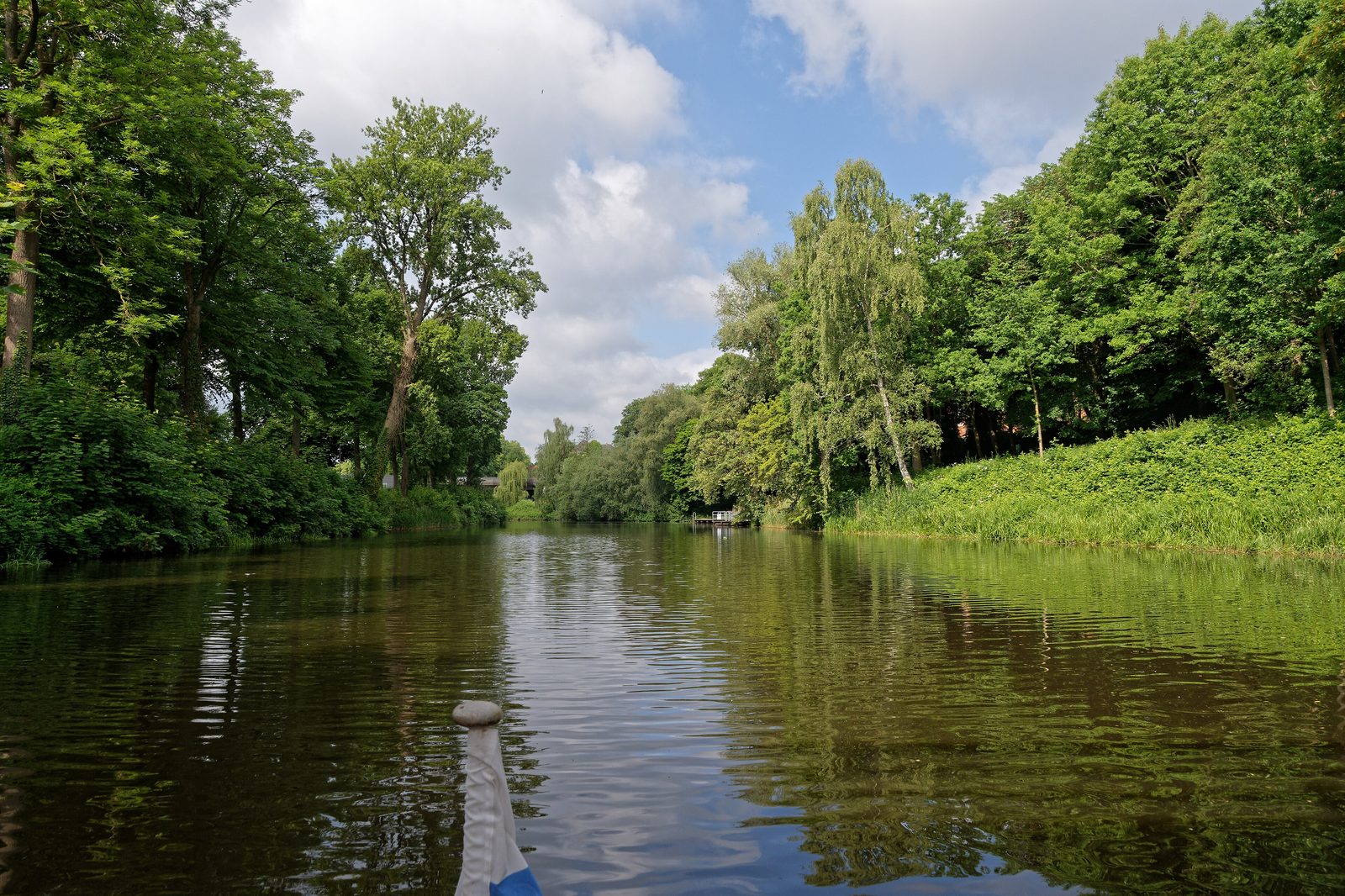
The moat itself is more than scenery. Part of it became the timber or raft harbour, separated by the Salztor lock from the town harbour built in 1880 and reaching to the footbridge at the Güldenstern bastion. It owes its name to a sawmill and a timber merchant who had their yards here; for a long time the Stade sailing club used it as winter moorings, and today houseboats and a boat hire lie there. Through the moat the timber harbour is still connected with the old Hanseatic harbour — so the fortress’s ring of water still works, only more peacefully.
A walk around the moat takes a good hour and passes the open-air museum, the local history museum and the timber harbour. Addresses and notes under Sights.
Gallery