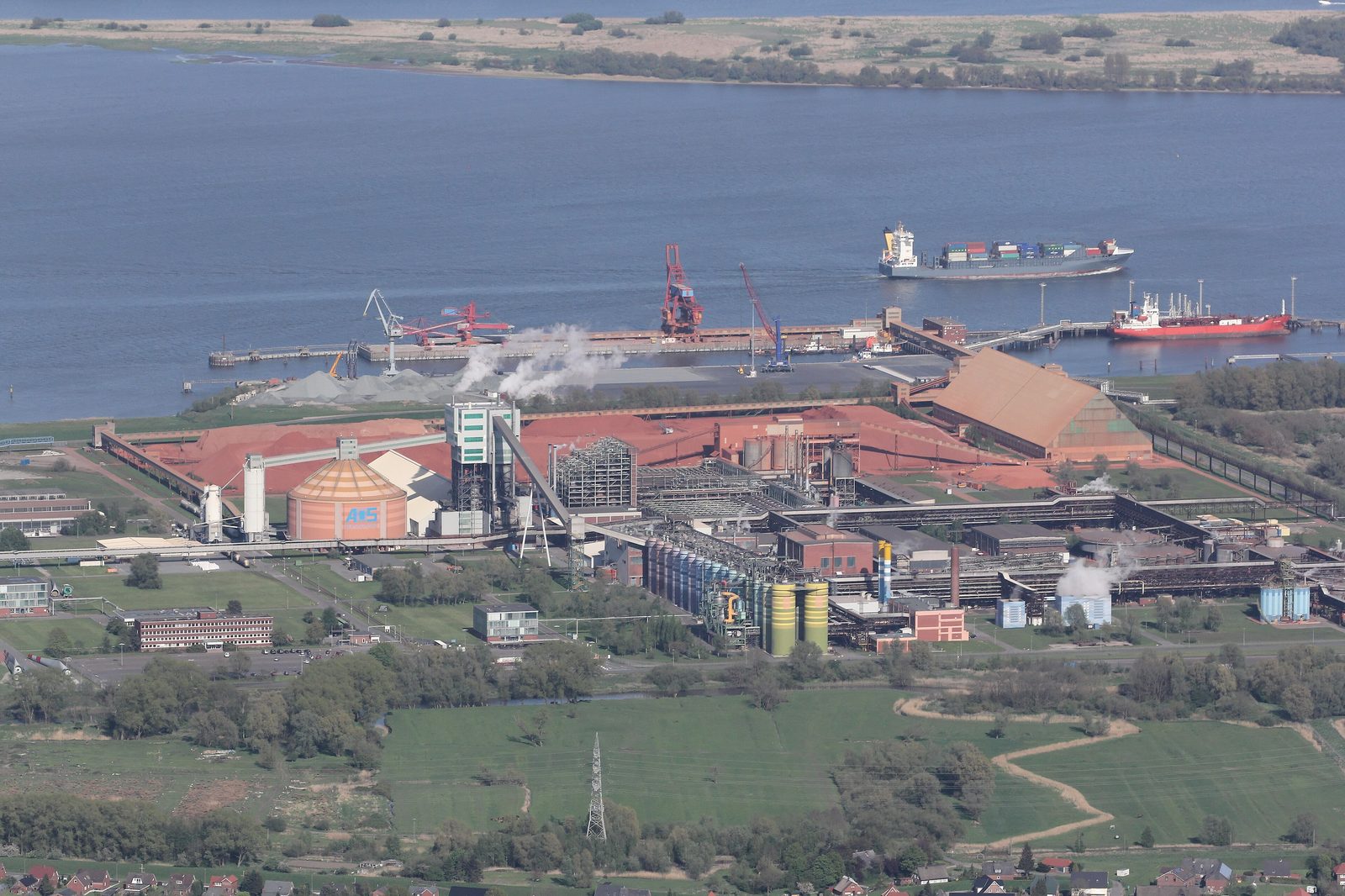
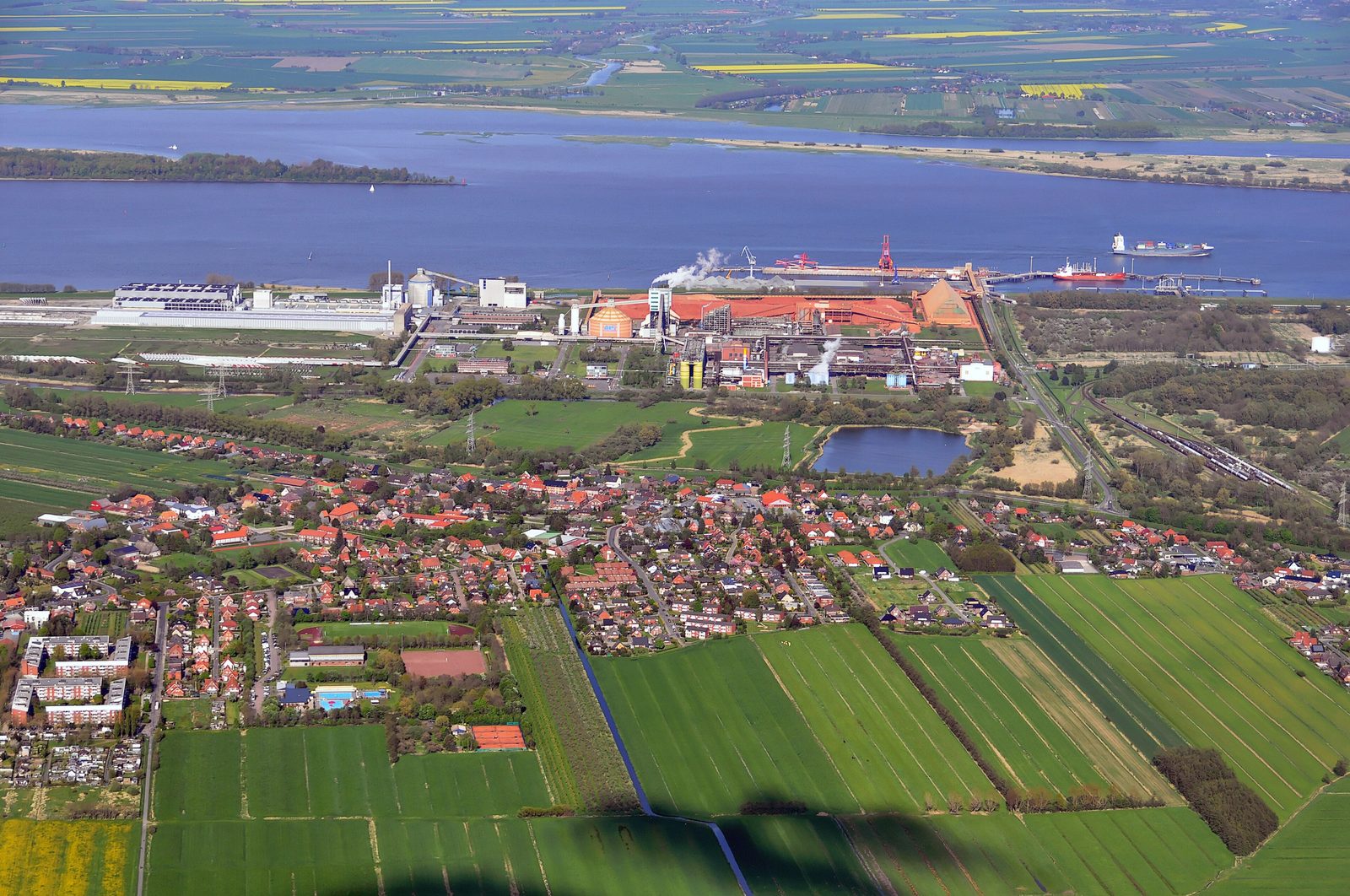
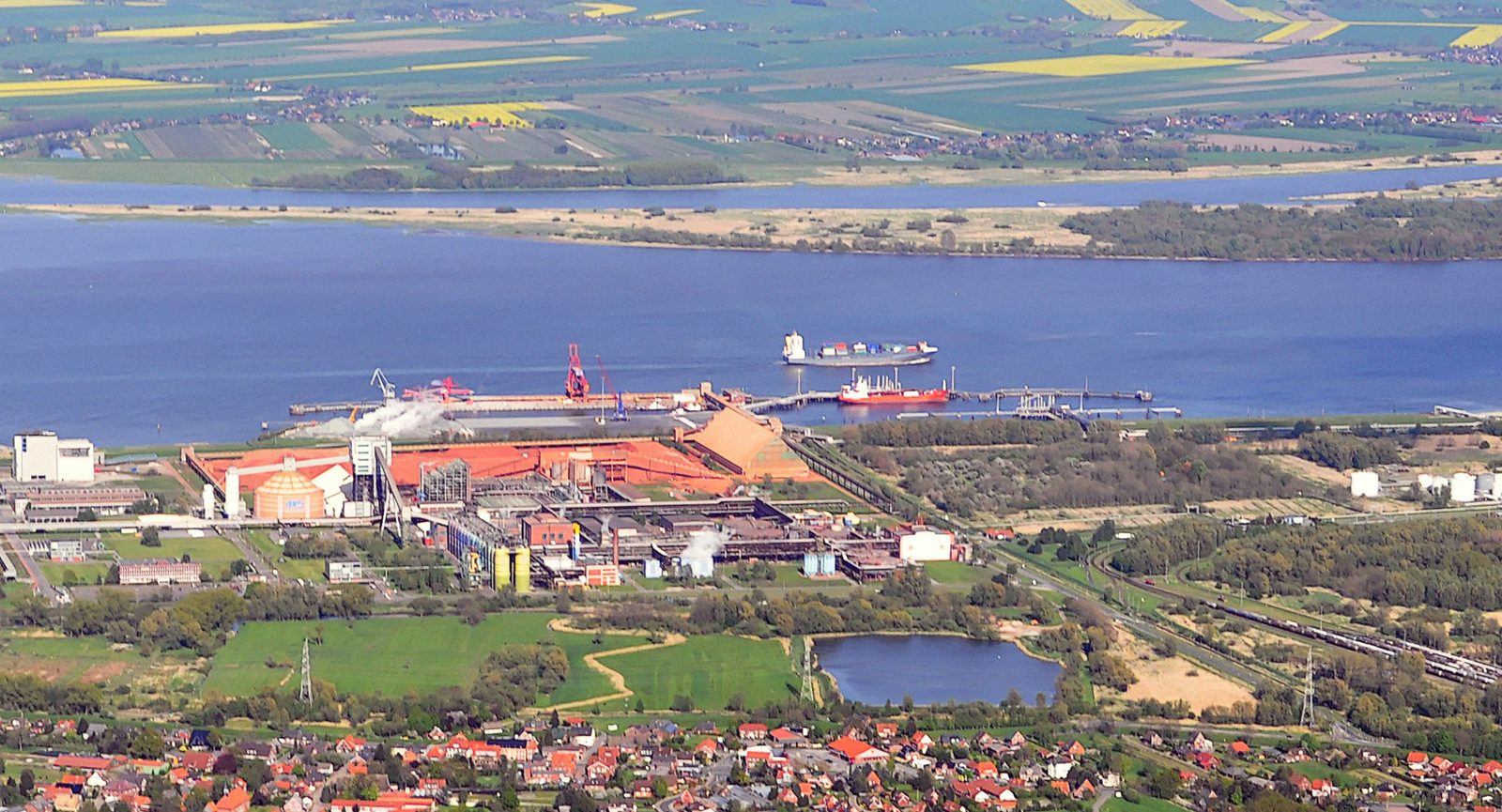
Look east from the Elbe dyke at Bützfleth and you see another side of Stade: quays, chimneys, tank farms and the dome of a decommissioned nuclear power station. The industrial estate on the Bützflether Sand is barely fifty years old — and it has changed the town’s economy more than any period since the Hanse.
A decision at the end of the 1960s
Until the 1960s Bützfleth was a parish on the lower Elbe where shipping, fruit growing and farming set the rhythm of the day. At the end of that decade the decision was taken to settle heavy industry here. It led to incorporation into Stade on 1 July 1972 — and to rapid change in the village. With the new plants came workers from elsewhere, among them many guest workers from Turkey, whose families are now part of the place in the second and third generation.
On the site to the east, the Bützflether Sand, Dow’s chemical works and an aluminium plant belonging to VAW were established; alongside them came Aluminium Oxid Stade GmbH (AOS), which still processes bauxite into aluminium oxide today. The aluminium plant itself was taken over by the Norwegian group Hydro in 2003 and shut down at the end of 2006 because of high electricity prices; parts of it were demolished.
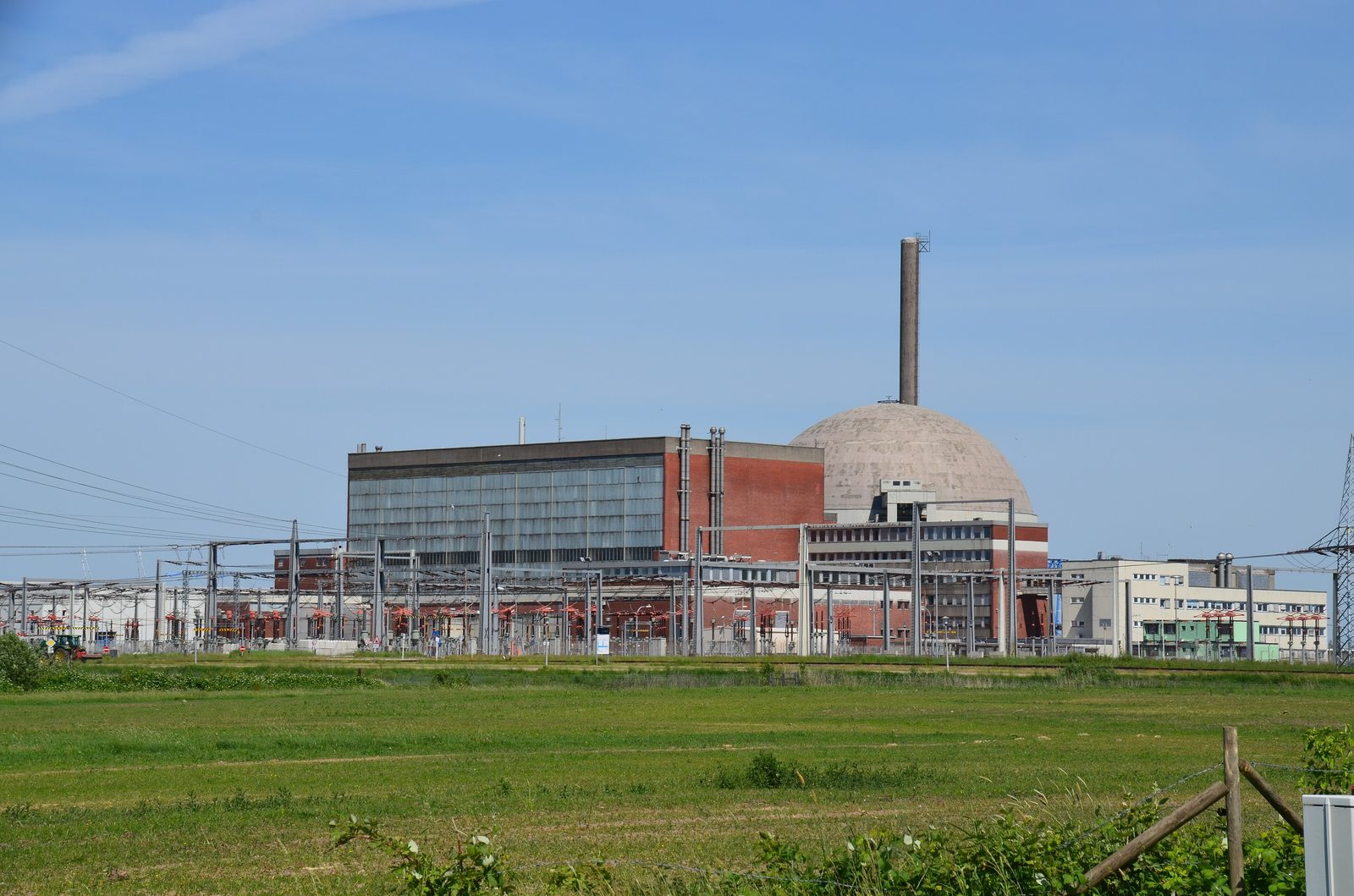
The Stade nuclear power station (1972–2003)
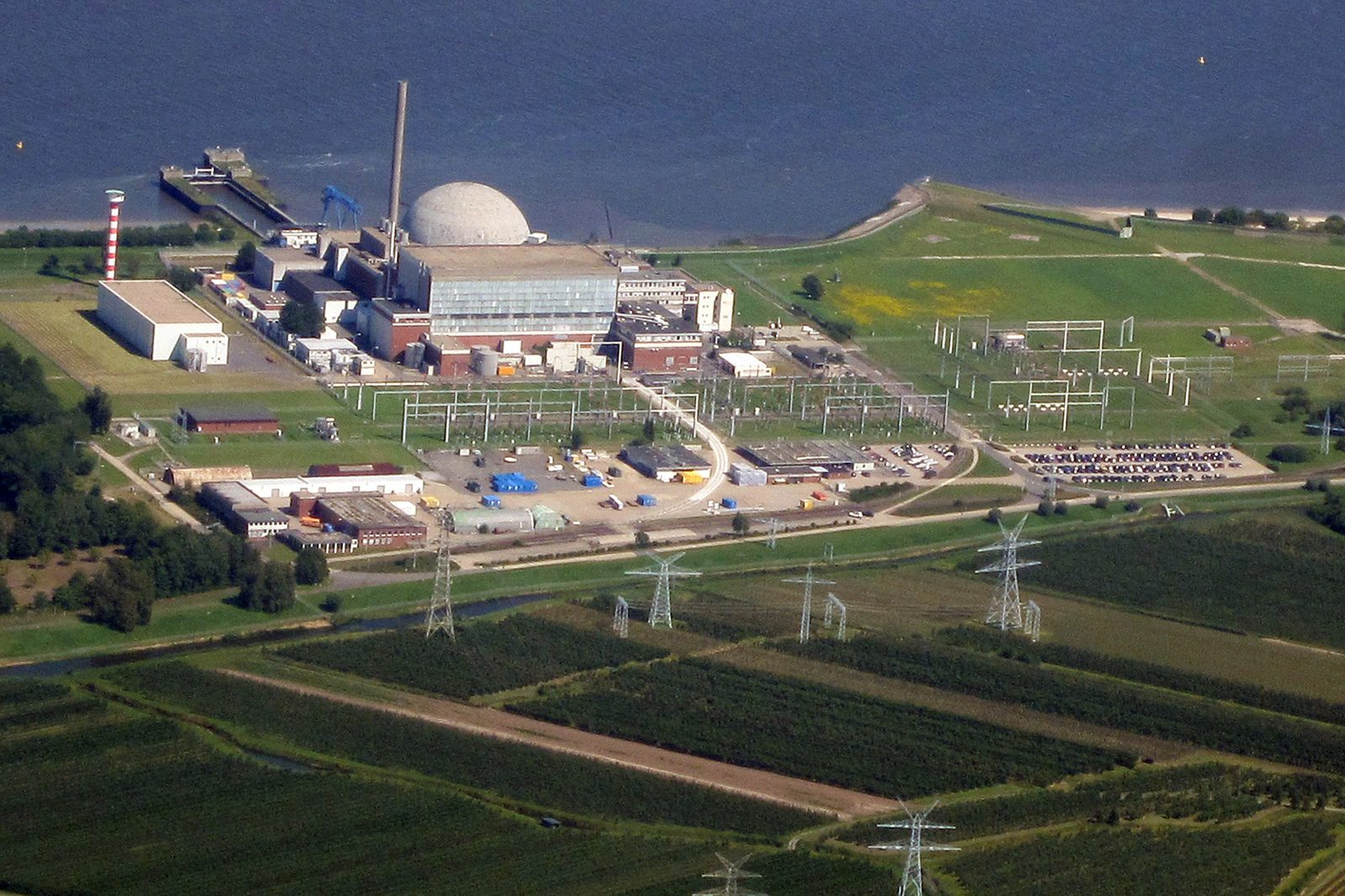
Right at the mouth of the Schwinge, in the Stadersand district, stands the best-known structure of the industrial estate: the Stade nuclear power station, KKS for short. It was applied for in July 1967 and built by Siemens, or rather Kraftwerk Union; on 19 May 1972 it began commercial operation. The pressurised water reactor supplied 630 megawatts of net electrical output. From 1984 the plant also delivered process steam to the neighbouring saltworks.
On 14 November 2003 at 8.31 a.m. the station was switched off — the first German nuclear power station to close after the decision to phase out nuclear energy. The operator E.ON cited economic reasons. The saltworks, which had drawn steam from it for some twenty years, closed with it. In April 2005 the last fuel elements left the site.
A dismantling that is taking longer than planned
Since October 2005 the plant has been dismantled in five phases: from the removal of parts no longer needed, through the steam generators and the reactor pressure vessel, to the conventional demolition of the buildings. Originally everything was to be finished by 2015. In 2014, however, radioactively contaminated condensate was discovered in the base of the reactor building, which pushed the schedule back by years. The cost was most recently put at around one billion euros; the present operator PreussenElektra has named the end of 2026 as the target for completion. A store for low- and medium-level radioactive waste on the site is licensed until 2046 at the latest.
The seaport of Stade-Bützfleth
The seaport also opened in 1972. It lies 60 nautical miles from the North Sea and can handle ships up to 270 metres long with a draught of 14 metres; the tidal range here is a good three metres. The north and south piers serve the works traffic of the local industry — above all bauxite for the aluminium oxide plant and chemicals for Dow — and there is also a north-west quay for building materials such as sand, gravel and clay. By volume handled, Stade is among the ten largest seaports in Germany: 6.2 million tonnes were moved in 2020 and 5.1 million tonnes in 2022. Since 2009 the state-owned operator Niedersachsen Ports has been extending the harbour in two stages.
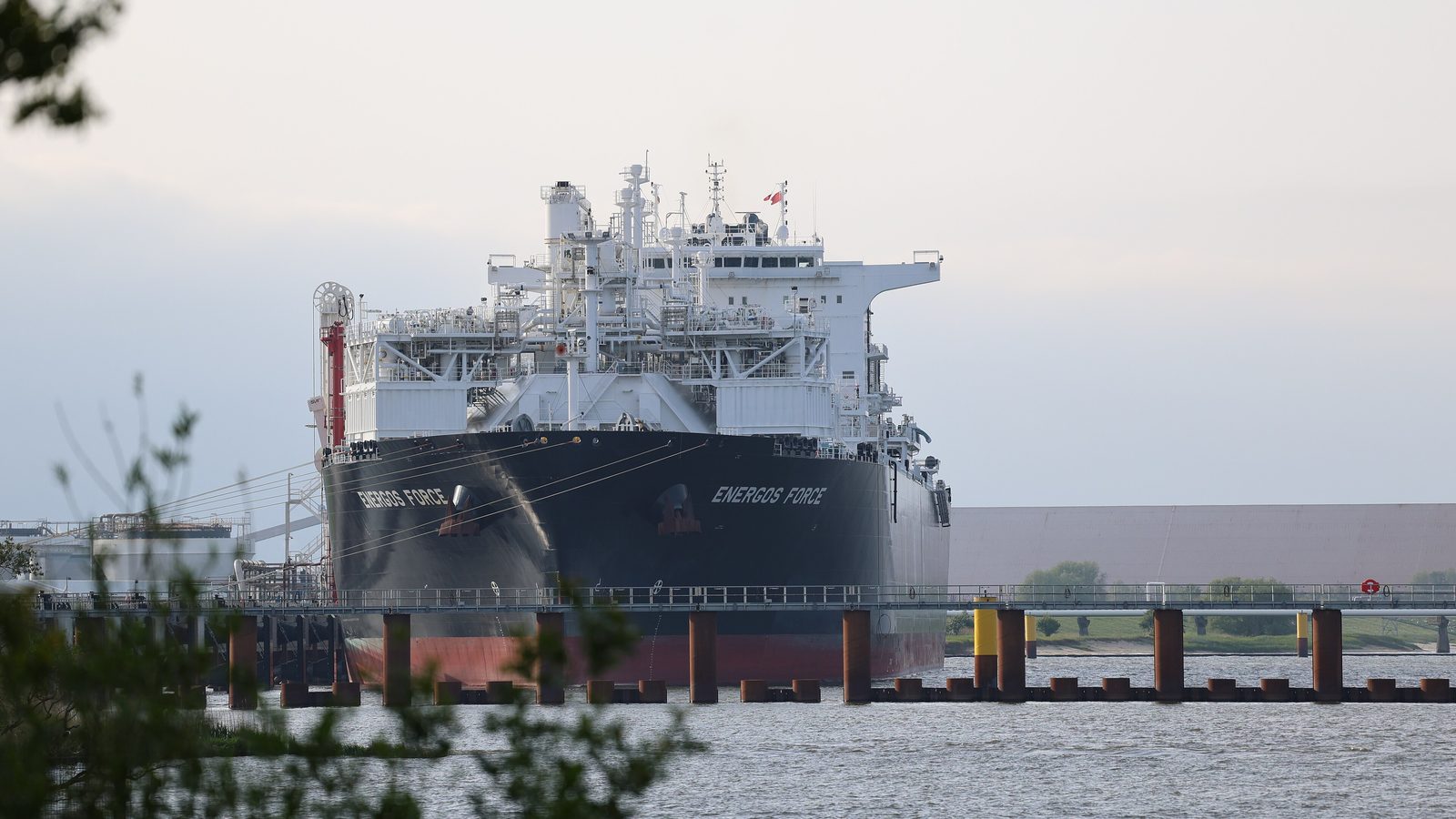
Along with Brunsbüttel, Wilhelmshaven and Rostock, Stade is one of the locations where a terminal for liquefied natural gas (LNG) is being built; the southern harbour is being extended by a berth for LNG tankers. Around fifty environmental organisations and citizens’ initiatives have spoken out against the project.
Airbus in the south — and what became of the coal plant
Industry is not confined to the Elbe. In the southern business park more than 2,000 people work at the Airbus plant in Stade and around the CFK Nord research centre, which deals with carbon-fibre reinforced plastics. In total the town counts more than 3,700 businesses with over 23,000 employees; in the Bützfleth industrial estate alone there are more than 2,300.
One chapter never left the drawing board: from 2008 Dow wanted to build a hard coal power station of up to 920 megawatts at its chemical works. Nearly 10,000 citizens lodged objections, the town council nevertheless approved it in 2014, and a legal challenge by environmental groups failed in 2017. The plant was never formally applied for, and after the coal commission recommended in 2019 that no new coal-fired stations be commissioned, the project went into limbo. Other companies also gave up their plans for new coal plants in Stade.
What remains is an industrial estate in transition: the power station and the saltworks closed, the aluminium plant shut down, but harbour expansion and LNG on the way. How the site at the mouth of the Schwinge will be used in future is one of the open questions of the town’s development.
Gallery
Sources
- Wikipedia: Stade (Abschnitte „Wirtschaft“, „Kernkraftwerk“, „Hafen“) (08/2026)
- Wikipedia: Kernkraftwerk Stade (04/2026)
- Wikipedia: Seehafen Stade (03/2025)
- Wikipedia: Bützfleth (07/2026)